Tooth Extraction in Lahore: Wisdom Tooth, Cost & Procedure
Tooth extraction in Lahore at Odonto is painless from start to finish. We take out severely decayed teeth, broken roots, loose teeth from gum disease, and — most often — impacted lower wisdoms that have been hurting for months. Whether your case is a five-minute simple extraction or a 60-minute wisdom tooth extraction under sedation, the area is fully numbed, the procedure is fully explained, and a written quote is in your hand before any cut is made. Tooth removal surgery at Odonto starts from PKR 2,500 — no hidden charges, no day-of-surgery surprises. Same-day emergency slots are available for active swelling.
 PMDC certified
The painless way to remove a tooth that cannot be saved.
A tooth extraction is the controlled removal of a tooth that has decayed, fractured, or become loose beyond repair. The tooth and surrounding gum are fully numbed with local anaesthesia — you feel pressure and vibration, never sharp pain. A simple non-surgical extraction lifts the tooth out with elevators and forceps in 15–20 minutes. A surgical dental extraction involves a small gum flap and sectioning of the tooth — used for broken roots, impacted wisdoms, and curved roots.
Extractions are used when no filling, crown, or root canal can save the tooth, or when the tooth needs to come out as part of orthodontic planning. Wisdom teeth are the most-asked-about extraction in our Lahore clinic — particularly partially or fully impacted lower wisdoms that have been triggering repeated gum infections for years. Molar removal is the second most common.
The five extraction types we perform at Odonto — simple non-surgical, surgical, impacted wisdom, multiple-tooth orthodontic prep, and atraumatic-for-implant — each have a distinct protocol. The video on the right walks through what each one looks like in the chair and what the first 24 hours of aftercare look like.
Six signs your tooth needs to come out.
Not every painful tooth needs to be removed — sometimes a root canal, a filling, or a deep cleaning is enough. But when one of these six signs is present, extraction is usually the safest and most cost-effective call.
Severe decay beyond restoration
When a cavity has destroyed so much tooth that no filling, crown, or root canal can save the structure — extraction is the cleanest way to stop the infection from spreading further into the jaw bone.
Impacted wisdom tooth pressing on neighbours
A wisdom tooth that has not erupted properly traps food, presses on the second molar, and triggers repeated gum infections. Removing it once stops the cycle of pain that often goes on for years.
Active abscess or spreading infection
Pus, swelling, fever, or a bad taste in the mouth signal infection inside the tooth or surrounding bone. When antibiotics and root canal cannot control it, prompt extraction is the safest call.
Tooth fractured below the gum line
A vertical root fracture or a crack that runs below the gum cannot be repaired. Once we see the line on X-ray, extraction followed by a written replacement plan is the right move.
Orthodontic crowding before braces
When the jaw simply does not have room for all the teeth to align, your orthodontist may ask us to remove one or two premolars to create space — usually before braces or aligners begin.
Loose tooth from advanced gum disease
Advanced periodontitis erodes the bone that holds the tooth in place. Once mobility is severe and the tooth wobbles when you bite, extraction protects the neighbouring teeth from going the same way.
Six reasons a clean extraction is worth the visit.
A well-done extraction is one of the highest-leverage treatments in dentistry — short procedure, immediate relief, and the difference between containing a problem and watching it spread to neighbouring teeth.
Stops the pain at the source
The most immediate benefit. A tooth that has been hurting for weeks or months stops hurting the same evening — once the local anaesthesia wears off you have soreness for two days, but the original pain is finished.
Prevents infection from spreading
A decayed or abscessed tooth is a continuous source of bacteria that can drain into the jaw bone, the sinus, or the bloodstream. Removing it ends the source — and an antibiotic course finishes the job.
Protects the neighbouring teeth
A loose tooth pulls bone away from the teeth either side. An impacted wisdom rots the second molar from behind. Cleanly removing the problem tooth stops both teeth from being lost together.
Makes orthodontic treatment possible
Severely crowded jaws cannot be aligned without creating space. Removing one or two premolars before braces or aligners is what allows the rest of the teeth to be straightened cleanly.
Resolves the case in 15–60 minutes
Unlike a multi-visit root canal, an extraction is one short visit. Even a fully impacted wisdom rarely takes more than an hour. Most patients return to work or class the next day.
Restores normal eating and sleep
A patient who has been chewing on one side and waking at 3 a.m. with throbbing pain often does not realise how much energy that costs. The most common feedback two weeks after an extraction: "I forgot which side it was on."
Five tooth extraction options. One that fits your case.
Every extraction at Odonto falls into one of five families. The category is not about how serious your case is — it is about how the tooth is sitting in the bone and what tools are needed to remove it cleanly. Each type below has its own protocol, fee, and recovery curve.
 Most common
Simple non-surgical extraction
For erupted teeth that are visible above the gum line and have straight roots. The tooth is loosened with an elevator and lifted out cleanly with forceps under local anaesthesia. Most appointments wrap up inside half an hour.
 Specialist
Surgical extraction (broken or decayed root)
When a tooth is broken at or below the gum line, has curved roots, or has been so decayed that there is nothing to grip with forceps. A small gum flap is raised, the root is removed cleanly, and self-dissolving sutures close the site.
Wisdom · primaryImpacted wisdom tooth surgery
For partially or fully impacted lower wisdom teeth — the most-asked-about extraction in our clinic. We map the inferior alveolar nerve on a panoramic OPG or 3D CBCT first, then section the tooth in pieces under local anaesthesia for a controlled, painless removal.
Orthodontic prepMultiple-tooth extraction (orthodontic)
Typically four first premolars removed in one or two visits before braces or aligners begin. Each tooth is a routine simple extraction — the value of doing them together is one numbing visit, one round of recovery, and a discounted per-tooth fee.
Implant prepAtraumatic extraction for implant
A specialised technique for teeth that will be replaced with a dental implant. The tooth is removed using gentle vertical forceps and periotomes — without expanding the socket — so the surrounding bone walls are preserved for either same-day or delayed implant placement.
Transparent pricing. No hidden charges.
The tooth extraction cost in Lahore at Odonto is fixed per category and per tooth. Prices below are all-inclusive: clinical examination, X-ray, local anaesthesia, the extraction itself, suturing if needed, gauze, painkillers if prescribed, and the seven-day WhatsApp follow-up. The free 15-minute consultation always includes a written quote before any tooth is touched.
| Extraction type | Price (PKR) |
|---|---|
| Simple non-surgical extractionErupted anterior · single root | PKR 1,500–3,500 |
| Simple molar (non-surgical)Erupted molar · multi-root | PKR 2,500–5,000 |
| Surgical extractionBroken root / decayed root | PKR 5,000–10,000 |
| Wisdom tooth — erupted simpleUpper or lower · accessible | PKR 3,500–6,000 |
| Wisdom tooth — partially impactedSurgical · gum flap | PKR 8,000–15,000 |
| Wisdom tooth — fully impacted (sectioned)Bone removal + sectioning | PKR 12,000–25,000 |
| Multiple extractions per visitOrtho prep · 4 first premolars | PKR 8,000–15,000 |
| Atraumatic extraction (implant prep)Bone-preserving technique | PKR 6,000–12,000 |
| IV sedation add-onAnxiety / multiple wisdoms | +PKR 15,000–30,000 |
| CBCT for impacted wisdom planning3D nerve mapping | +PKR 6,000–12,000 |
| Socket preservation graftBone graft + membrane | +PKR 25,000 |
For a simple extraction with panoramic opg and local only.
Ten factors that shape your tooth extraction price.
Extraction pricing in Lahore looks confusing because the spread is so wide — PKR 1,500 at one clinic, PKR 30,000 at another. The ten factors below explain almost the whole difference.
Type of extraction
A simple non-surgical extraction is the cheapest. Surgical extractions are mid-tier. Impacted wisdom teeth — especially fully bony lower wisdoms — are the most expensive. The single biggest factor in your final figure.
Tooth position
Anterior (front) extractions are usually the simplest. Lower wisdoms are the most complex because of nerve proximity. Upper molars carry a small risk of sinus communication that has to be managed during the procedure.
Imaging needed
A periapical X-ray (PKR 800) is enough for most simple cases. A panoramic OPG (PKR 1,500) is needed for wisdom teeth. A 3D CBCT scan (PKR 6,000–12,000) is needed for deeply impacted wisdom teeth close to the inferior alveolar nerve.
Anaesthesia or sedation choice
Local anaesthesia is included free. Nitrous oxide adds PKR 5,000 and is excellent for anxious adults. IV sedation costs PKR 15,000–30,000 — the right call for very anxious patients or for removing all four wisdoms in one go.
Surgeon experience and specialisation
A general dentist charges less than an oral surgeon. Both are appropriate for routine cases. For deeply impacted lower wisdom teeth or multiple-tooth cases under sedation, a specialist oral surgeon is the right operator.
Government hospital vs private clinic
Government and teaching dental hospitals subsidise extraction fees heavily, but with junior-dentist execution and multi-week appointment queues. Private clinics like Odonto charge full price but you see a senior clinician on the same week.
Number of teeth removed in one visit
Multiple extractions in the same visit usually attract a per-tooth discount. Removing all four wisdoms in one sedation appointment is the most economical wisdom-tooth pathway. We quote in writing before any prep work begins.
Socket preservation graft (optional)
A bone graft placed into the socket at the time of extraction (PKR 25,000) preserves bone height for a future implant. Worth adding when the gap will be replaced. Skip if it is a wisdom tooth or the gap will not be filled.
Adjacent treatments
If a scaling or root canal is needed before the extraction, those are quoted separately. Aftercare medications, gauze, and the seven-day review are included in every quote at Odonto.
Replacement planning
A dental implant, bridge, or partial denture is a separate cost. We discuss all three at the same consultation so you understand the full out-the-door figure for both removing and replacing the tooth.
Government dental hospital or private clinic?
Both are legitimate options. Here's the honest comparison so you pick the right one for your case — especially for surgical and wisdom-tooth extractions where the operator matters more than the headline fee.
Subsidised, but with trade-offs.
Lahore has good government and dental teaching hospitals — Mayo, Punjab Dental Hospital, the public-sector dental departments. Extraction work is heavily subsidised.
- ✓Significantly lower fees — sometimes 60–80% less than private
- ✓Same baseline anaesthesia and sterilisation
- ×Long appointment queues — multi-week waits common
- ×Junior dentists or house officers usually do the procedure
- ×Limited sedation choice — often local anaesthesia only
- ×CBCT and digital planning rarely available on-site
Senior clinician, full menu, same week.
Private clinics like Odonto charge full market price but you see a senior clinician on your scheduled date, choose from any imaging or sedation option, and get a written quote before any tooth is touched.
- ✓Senior clinician executes the procedure — every time
- ✓Local, nitrous, and IV sedation all available
- ✓CBCT for nerve-adjacent wisdom cases
- ✓Same-week appointments, often same-day for emergencies
- ✓Itemised invoice for insurance reimbursement
- ×Higher fees than government hospital
Oral surgeon or general dentist?
Most extraction work in Pakistan is done by senior general dentists. A small subset of cases — fully bony impacted lower wisdoms close to the inferior alveolar nerve, multi-tooth IV-sedation cases, jaw-cyst extractions — are best handled by a specialist oral surgeon in Lahore. Here is when each is the right call.
The right choice for most extractions.
An experienced general dentist places thousands of extractions a year and handles 90%+ of extraction work in Lahore. For simple extractions, surgical extractions of broken roots, erupted wisdom teeth, and ortho-prep premolar cases, a senior general dentist is the right operator — and is what you get at Odonto by default.
- ✓Simple and surgical extractions — routine
- ✓Erupted wisdom teeth and ortho-prep premolars
- ✓Pricing 15–25% lower than specialist
The right call for complex impactions.
A specialist oral surgeon is needed when the case involves a fully bony impacted lower wisdom touching the inferior alveolar nerve, multiple-tooth IV-sedation cases, jaw-cyst extractions, or any extraction in a medically complex patient on blood thinners or with a recent cardiac history. We refer to a specialist within our network when the case warrants it — and we tell you upfront if your case needs one.
- ✓Fully bony impacted lower wisdom teeth
- ✓Multi-tooth IV-sedation cases
- ✓Jaw cyst and complex medical cases
Simple or surgical — we know which from the X-ray.
Almost every patient asks the same thing at consultation: "Will it be the simple kind or the surgical kind?" The honest answer is — the X-ray tells us before we touch the tooth. Here is how the two differ in protocol, cost, and recovery.
For erupted teeth visible above the gum.
The tooth is loosened with elevators that widen the periodontal ligament space, then lifted out cleanly with forceps. No gum incision, no sectioning, no sutures. Used for erupted front teeth, erupted molars with straight roots, mobile teeth from gum disease, and erupted wisdoms. Local anaesthesia only — no sedation needed for routine cases.
For broken, impacted, or buried teeth.
A small gum flap is raised to expose the tooth or the buried root. A tiny amount of bone may be removed for access. The tooth is sectioned with a fine bur into smaller pieces, each piece is removed cleanly, the socket is irrigated, and self-dissolving sutures close the gum. Used for broken roots, partially or fully impacted wisdoms, deeply curved roots, and buried teeth.
Twelve steps. From numb to home.
Every tooth extraction at our Lahore clinic follows the same painless protocol — whether it is a simple front tooth or a fully impacted lower wisdom under sedation. You see what is happening at every stage, and you tell us when you cannot feel the pinch before any cut is made.
Examination & history
We check the tooth, surrounding gum, bite, and your medical history. Blood thinners, diabetes, pregnancy, and certain medications change the plan — we ask about everything before booking.
X-ray / OPG / CBCT review
A periapical X-ray for simple cases. A panoramic OPG for wisdom teeth. A 3D CBCT when the tooth is close to the inferior alveolar nerve or the maxillary sinus. We show you the image and explain what we are seeing.
Treatment plan & written quote
You see your X-ray, we walk through the plan in plain language, and a written quote goes in your hand before any tooth is touched. There is no pressure to proceed the same day — and there are no hidden fees if you do.
Local anaesthesia
Local anaesthesia numbs the tooth, the gum, and the surrounding bone fully. We test the area before cutting — you tell us when you cannot feel the pinch. Nitrous oxide or IV sedation if you have requested it.
Gum & bone access (surgical only)
For surgical and impacted cases we raise a small gum flap to see the tooth or the buried root. A tiny amount of bone may be removed to create access. You feel pressure, never sharp pain.
Tooth elevation
A series of fine elevators gently widen the socket on every side, breaking the ligament that holds the tooth to the bone. The tooth begins to wobble — most of the work happens here, before the forceps come out.
Forceps removal or sectioning
For a simple case the forceps lift the tooth out in one piece. For impacted wisdoms we section the tooth into two or three smaller pieces with a fine bur — each piece comes out cleanly, the surrounding bone stays untouched.
Socket cleaning & inspection
The socket is irrigated with sterile saline. Any granulation tissue, infection debris, or root fragments are removed. We check the socket walls for fractures and confirm the inferior alveolar nerve is uninjured (lower wisdoms).
Suturing (surgical only)
Self-dissolving sutures close the gum flap and reduce post-operative bleeding. They dissolve on their own over 7–10 days — no separate visit just to remove them. Simple extractions usually do not need any sutures.
Optional: socket preservation graft
When the gap will be replaced with an implant, we pack a bone graft into the socket and cover it with a resorbable membrane. Adds PKR 25,000 but preserves bone width and height for clean implant placement 3–4 months later.
Gauze pressure & post-op brief
A folded gauze pad sits over the socket for 30 minutes — bite firm, do not chew. A clot forms, bleeding stops. We hand you a printed aftercare sheet, the painkillers if prescribed, and our WhatsApp number.
Seven-day review (WhatsApp or in person)
A short check-in at day 7 — usually a WhatsApp photo for simple cases, an in-clinic check for surgical cases. We confirm clean healing, remove any non-dissolving stitches, and book the replacement plan if needed.
Six small habits that prevent dry socket.
The first 24–48 hours decide how smoothly your healing goes. Stick to the six points below to protect the blood clot, prevent dry socket, and keep the area clean. Painless recovery is the rule when these are followed properly.
Bite firmly on gauze for 30 minutes
This forms the blood clot that protects the bone underneath. Do not lift the gauze early to check — you will dislodge the clot and start the bleeding again. Replace once if needed; call us if bleeding does not slow inside 60 minutes.
Use a cold compress for the first 24 hours
20 minutes on the cheek, 20 minutes off. Reduces swelling significantly during the first day. Switch to a warm compress from day three to help any residual swelling resolve.
Soft, cool food for the first 48 hours
Yogurt, lassi, mashed potato, dal khichdi, smoothies, ice cream, and lukewarm soup. Anything you can eat without chewing on the socket. From day three you can add lukewarm soft food.
Salt-water rinses from day 2 — gentle
Half a teaspoon of salt in a cup of warm water, three times a day after meals. Tilt the head, hold the water in the mouth, let it drain — never swish forcefully or you will dislodge the clot.
Take painkillers as prescribed
Take the first dose before the local anaesthesia fully wears off. Stays ahead of the discomfort curve. Most patients only need 2–3 days of paracetamol or ibuprofen — we never prescribe opioids for routine extractions.
Keep your head elevated when sleeping
Use an extra pillow on the first two nights. Reduces overnight swelling, throbbing, and the chance of restarting the bleeding. Avoid lying completely flat for the first 48 hours.
Four habits that take recovery from one week to permanent.
Aftercare is what you do in the first week. Long-term care is what you do for the next decade — replacement timing, dry-socket vigilance, hygiene, and recall. The four below decide whether the extracted tooth becomes a clean fix or the start of a chain of problems on the same side of the mouth.
Replace the tooth on the right timeline
Wisdom teeth usually do not need replacement. Every other extracted tooth should be replaced within 6–12 months — otherwise the surrounding teeth drift, the opposing tooth over-erupts, and the bone slowly shrinks. Implant, bridge, or partial denture — we discuss all three at the original consultation.
Watch for dry socket signs in the first week
Severe pain that suddenly worsens 2–4 days after extraction, sometimes radiating to the ear, with a bad taste — that is dry socket. Easily fixed in our clinic with a medicated dressing. Message us on WhatsApp the moment you feel it; do not wait.
Keep the area meticulously clean
A clean socket heals fast. Brush the rest of the mouth normally from day one — just avoid the extraction site for 48 hours. From day three, gentle brushing of the socket area is fine. Most healing happens in the first 2 weeks.
Six-monthly hygiene visit
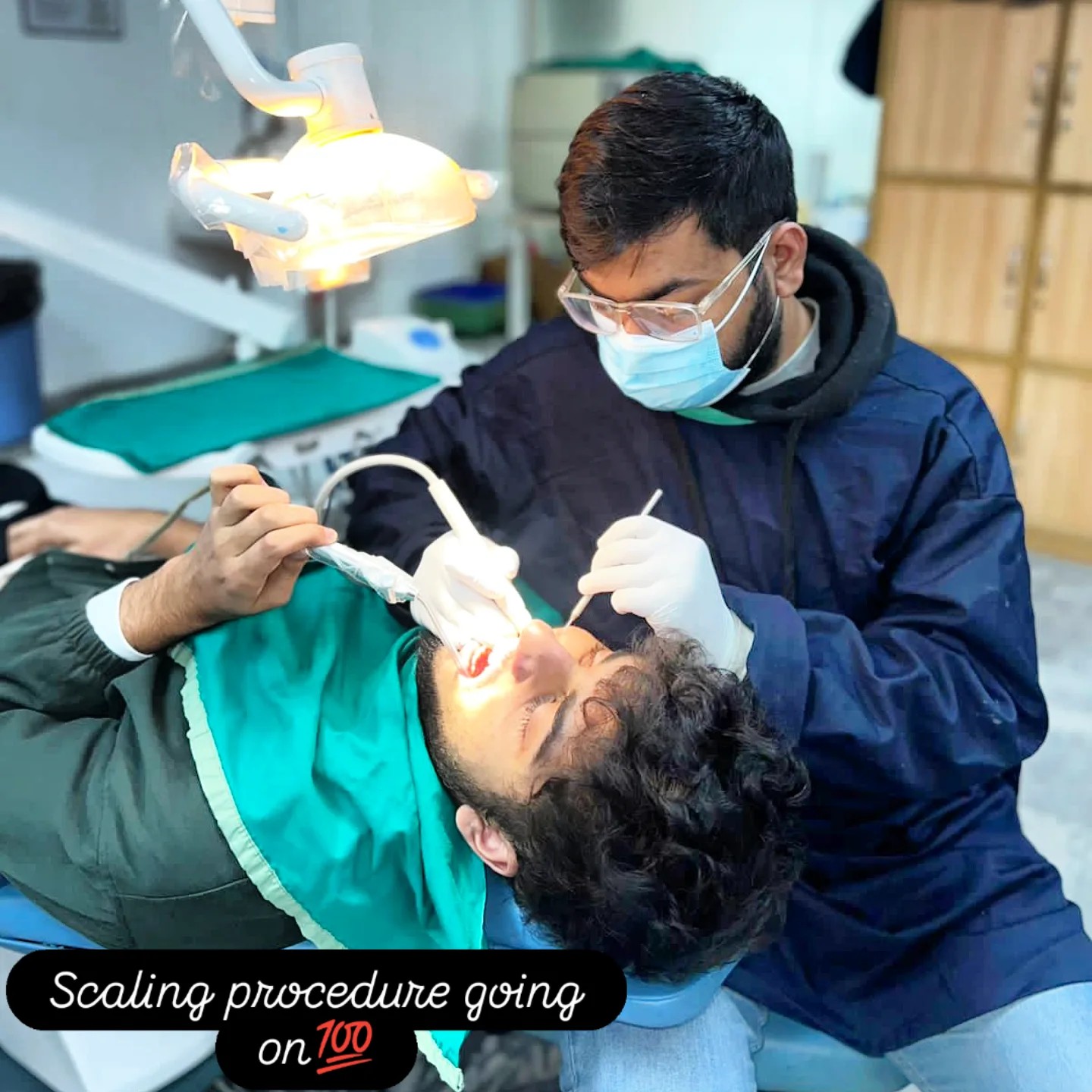
Whether or not you replace the tooth, the gap changes how plaque sits. A six-monthly scaling keeps the neighbouring teeth healthy and lets us catch any drift or over-eruption at the earliest possible point — often years before it becomes a problem.
Six things that could go wrong — and how we handle each.
No extraction is risk-free. Most patients have a smooth, painless recovery, but the six potential issues below are worth knowing about before you book — including how we mitigate each at our clinic. Honesty up front beats surprises at day 4.
Dry socket (alveolar osteitis)
The most-talked-about extraction complication. The blood clot dislodges 2–4 days after extraction, exposing the bone. Sharp pain, sometimes radiating to the ear, with a bad taste. More common in lower wisdoms, smokers, and patients who sip through straws or rinse aggressively.
Sinus communication (upper molars)
Upper molar roots sit very close to the maxillary sinus. In rare cases the extraction creates a small opening between the socket and the sinus. Patients notice air or liquid moving between mouth and nose.
Inferior alveolar nerve injury (lower wisdoms only)
A lower wisdom tooth lying close to the inferior alveolar nerve carries a small risk of post-op numbness in the lower lip and chin. Usually temporary, occasionally lasting weeks. This is why we 3D-CBCT-map every borderline lower wisdom before any cut.
Post-operative infection
Bacteria entering the socket before the clot fully forms can cause a low-grade infection — swelling, fever, foul taste at day 3–5. More common when oral hygiene is poor or when patients smoke during the first week.
Bleeding restarting at home
Mild oozing for the first 24 hours is normal. Active bleeding restarting hours later is usually from spitting, rinsing, sipping through a straw, or vigorous exercise. Almost never from the extraction itself.
Jaw fracture (very rare)
A fully bony impacted lower wisdom in a thin mandible carries a tiny risk of a hairline fracture during sectioning. We have not had a single case in the clinic — but it is documented in the literature and we list it for honesty.
Wisdom tooth extraction in Lahore — what to expect.
Wisdom tooth extraction is the most-asked-about procedure in our clinic. The third molars erupt between 17 and 25 — and for most Pakistani jaws, there simply is not room. Below is exactly what a wisdom-tooth visit looks like at Odonto, from the OPG to the final stitch.
Why we always X-ray a wisdom tooth before deciding
The bottom line on wisdom teeth: do not let anyone extract one without a panoramic OPG at minimum, and a 3D CBCT if the X-ray shows the root touching the inferior alveolar nerve. The whole point of wisdom-tooth surgery is to avoid the rare but real risk of nerve injury — that risk is almost entirely mitigated by good imaging before any cut. We never skip this step at Odonto, even when patients walk in saying "just take it out today."
Pull it, save it, or live with it? Three options compared.
When a tooth is in serious trouble, you usually have three options. Extraction is faster and cheaper. A root canal saves the tooth itself — but only if there is enough structure left to save. Doing nothing has its own cost down the line.
Twelve answers our Lahore patients ask before booking.
If your question isn't here, message us on WhatsApp — we usually reply within thirty minutes during clinic hours. Same-day extraction slots are available for active swelling or severe pain.
How much does tooth extraction cost in Lahore?+
At Odonto, the tooth extraction cost in Lahore starts at PKR 2,500 for a simple non-surgical extraction. A surgical extraction (broken or decayed root) ranges from PKR 5,000–10,000. An erupted wisdom tooth is PKR 3,500–6,000. A partially impacted wisdom tooth runs PKR 8,000–15,000, and a fully impacted lower wisdom under bone removal and sectioning is PKR 12,000–25,000.
Multiple extractions in one visit (for example four ortho-prep premolars) are PKR 8,000–15,000 for the set. IV sedation adds PKR 15,000–30,000. CBCT for impacted wisdom planning is PKR 6,000–12,000. Every quote is written, all-inclusive, and given before any tooth is touched.
Is a tooth extraction painful?+
No. The tooth, the gum, and the surrounding bone are fully numbed with local anaesthesia. During the procedure you feel pressure and vibration, never sharp pain. We test the numbness before the first cut — you tell us when you cannot feel the pinch. For very anxious patients, nitrous oxide or IV sedation is available.
After the procedure, mild soreness for 2–3 days is normal and is well controlled with simple painkillers like paracetamol or ibuprofen. Most patients return to work or class the next day. We never prescribe opioids for routine extractions.
How long does a wisdom tooth extraction take?+
A wisdom tooth extraction takes 15–60 minutes from numbing to gauze in place, depending on impaction. An erupted upper wisdom often comes out in under 20 minutes. A partially impacted lower wisdom takes 30–45 minutes. A fully bony impacted lower wisdom — the most complex case — takes 45–60 minutes and is sectioned into pieces under local anaesthesia or sedation.
The actual removal is often the shortest part of the appointment. Most of the time is spent numbing properly and explaining what is happening at each stage.
What is dry socket and how do I prevent it?+
Dry socket happens when the blood clot in the extraction socket dislodges 2–4 days after the procedure, leaving the bone exposed. Symptoms are sharp pain that suddenly worsens, sometimes radiating to the ear, with a bad taste in the mouth. The biggest causes are smoking, sipping through a straw, vigorous rinsing, and spitting in the first 48 hours.
Stick to the aftercare list — bite on gauze for 30 minutes, no smoking, no straws, no spitting, gentle salt-water rinses only from day two — and the risk drops dramatically. If it does happen, message us on WhatsApp; we treat it the same day with a medicated dressing and the pain settles within 30 minutes.
Do I really need my wisdom tooth removed?+
Not always. Wisdom teeth that are erupted, in a good position, easy to clean, and not causing problems can stay. Wisdom teeth are removed only when they are impacted, causing repeated pain or infection, decaying because they cannot be cleaned, or pushing other teeth out of line.
A panoramic OPG (PKR 1,500) confirms whether removal is genuinely needed. We never recommend wisdom tooth extraction "just in case" — every case has to justify itself on the X-ray.
How long does it take to recover from a tooth extraction?+
Initial gum healing takes 7–10 days. The bone underneath continues to remodel for 3–6 months, but normal eating, work, and routine usually resume within a week. Surgical and impacted wisdom cases may take a few extra days to feel completely normal.
Most patients are surprised by how quickly the discomfort fades. Day 1 is mild swelling, day 2–3 is peak soreness, and from day 4 onwards it steadily improves.
Should I replace the extracted tooth?+
Usually yes — except for wisdom teeth, which are typically not replaced. Leaving a gap allows the surrounding teeth to drift, the opposing tooth to over-erupt, and the bone to slowly shrink. Replacement options include dental implants (gold standard), a dental bridge, or a partial denture.
We discuss all three at the original consultation, and a socket preservation graft at the time of extraction (PKR 25,000) keeps your options open for a clean implant 3–4 months later.
What is the difference between Odonto and a government dental hospital for an extraction?+
Government and teaching dental hospitals in Lahore offer subsidised extraction work at very low fees — but the trade-off is multi-week appointment queues, junior dentists or house officers performing the procedure, and limited imaging or sedation choice.
Private clinics like Odonto charge full market price but you see a senior clinician on the same week, get a written quote before any tooth is touched, and have CBCT and IV sedation available for complex cases. Many of our patients are people who tried the government option first and found the wait or the execution did not suit their wisdom-tooth case.
Can I drive home after my tooth extraction?+
Yes — after a simple extraction with local anaesthesia. The numbness wears off in 2–4 hours and driving is safe immediately after the appointment.
After IV sedation you must arrange a ride home — driving for at least 24 hours is unsafe. Nitrous oxide wears off within 15 minutes so driving after is usually fine, but we still confirm individually before you leave the chair.
Are tooth extractions safe during pregnancy?+
Elective extractions are usually postponed until after delivery. If there is an active infection or severe pain, the second trimester (months 4–6) is the safest window for an extraction. We coordinate with your obstetrician and use only pregnancy-safe medications and pregnancy-safe imaging — a shielded periapical X-ray rather than an OPG or CBCT wherever possible.
Emergency extractions in pregnancy are rare but not avoided when needed — leaving an active infection in place is the bigger risk to mother and baby.
What can I eat after a tooth extraction?+
For the first 24 hours stick to cool soft foods — yogurt, lassi, mashed potato, dal khichdi, smoothies, and ice cream. Anything you can eat without chewing on the socket. From day two add lukewarm soft foods.
Avoid hot, spicy, hard, sticky, or crunchy foods (no naan, biryani rice grains, gum, sticky sweets, chillies) for at least 7 days, and chew on the opposite side until the socket has closed. From day 7 onwards you can usually return to a normal diet, just avoiding the extraction side for one more week.
Should I see an oral surgeon or a general dentist for my extraction?+
A senior general dentist places hundreds of extractions a year and handles 90%+ of extraction work in Lahore. For a simple extraction, a single surgical extraction, or a routine erupted wisdom tooth, a senior general dentist is the right operator.
A specialist oral surgeon is the right call for fully bony impacted lower wisdom teeth close to the inferior alveolar nerve, multiple-tooth IV-sedation cases, or jaw-cyst extractions. We refer to a specialist oral surgeon within our network when the case warrants it — and we tell you upfront.
Dr. Mian Momin Ahmad
“Almost everyone who needs a tooth extracted has put it off. The fear is the same — pain, complications, the cost of replacement, what the dentist might find. I get it. Here is what I can promise. We will never recommend extraction if root canal is possible. When extraction is the right call, you will see your X-ray, hear the reasoning in plain language, and have a written quote in your hand before any tooth is touched. The procedure itself is rarely the part patients remember — what they remember is being told the truth, slowly and clearly, and that the whole thing was painless.”
What our extraction patients said about the visit.
Six recent reviews from patients who had extraction work done at Odonto. Names are accurate where the patient was happy to share them; treatment details and dates are real. Notice how often the word "painless" appears.
“I postponed my lower wisdom extraction for two years because of fear. Took 30 minutes total. Genuinely felt nothing during the surgery. Wish I had come a year ago — the headaches stopped the same week.”
“My molar broke at the gum line and I was sure it would be a nightmare. Dr. Momin showed me the X-ray, explained every step, and the surgical extraction was much easier than I expected.”
“Got all four wisdom teeth out in one IV-sedation visit. Woke up like nothing had happened. The honest pricing was the part I appreciated most.”
“Came in with a swollen jaw on a Saturday. Same-day appointment, X-ray, painless extraction, and a written aftercare sheet. The pain stopped that evening.”
“Two premolars taken out for ortho prep before my braces. Dr. Momin coordinated directly with my orthodontist. One numbing, one recovery, no fuss.”
“I had been quoted higher prices at two other Lahore clinics. Odonto was the most transparent — written quote in advance, no upselling, and the procedure was painless.”
Real Lahore patients. Real outcomes.
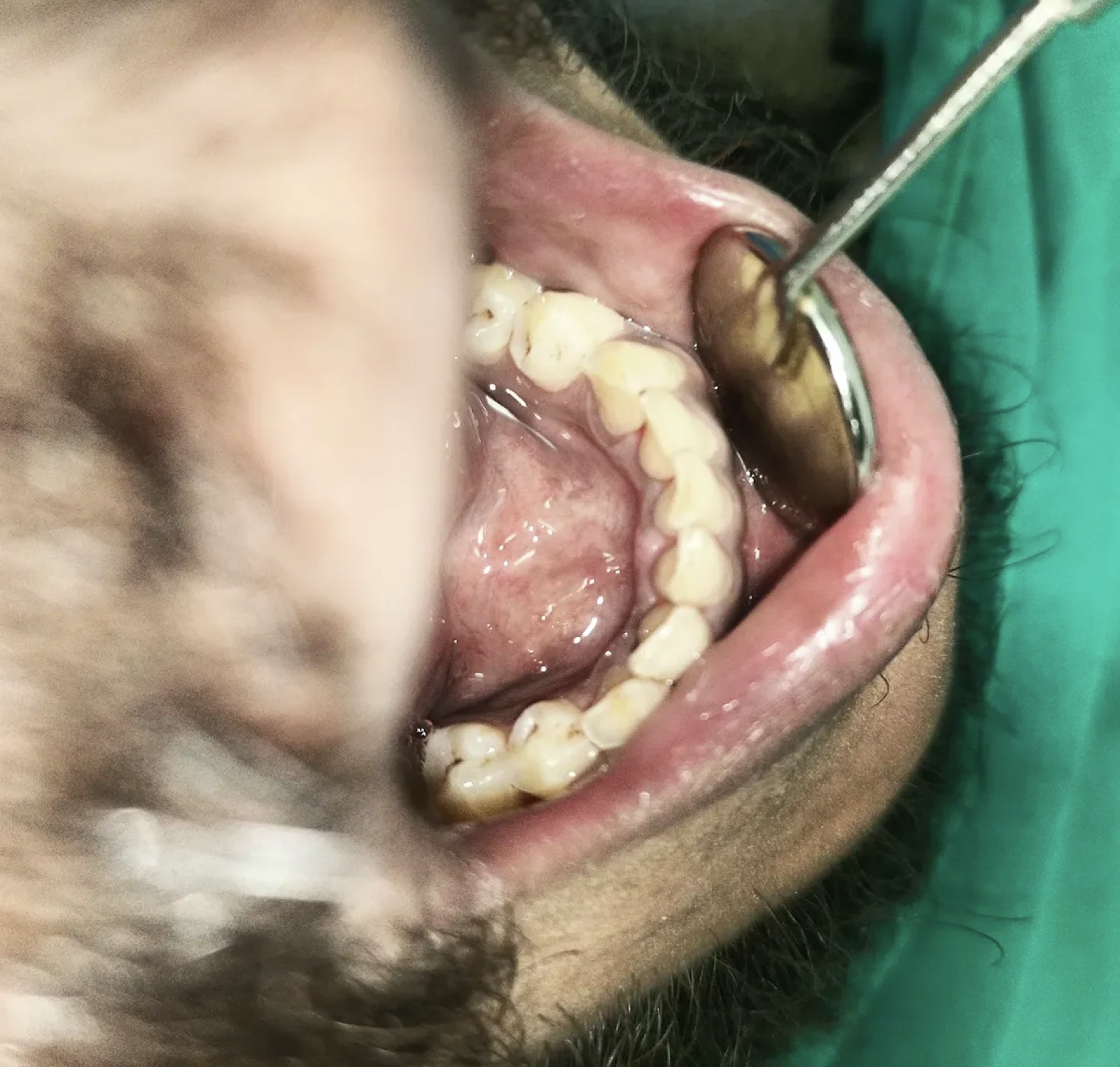
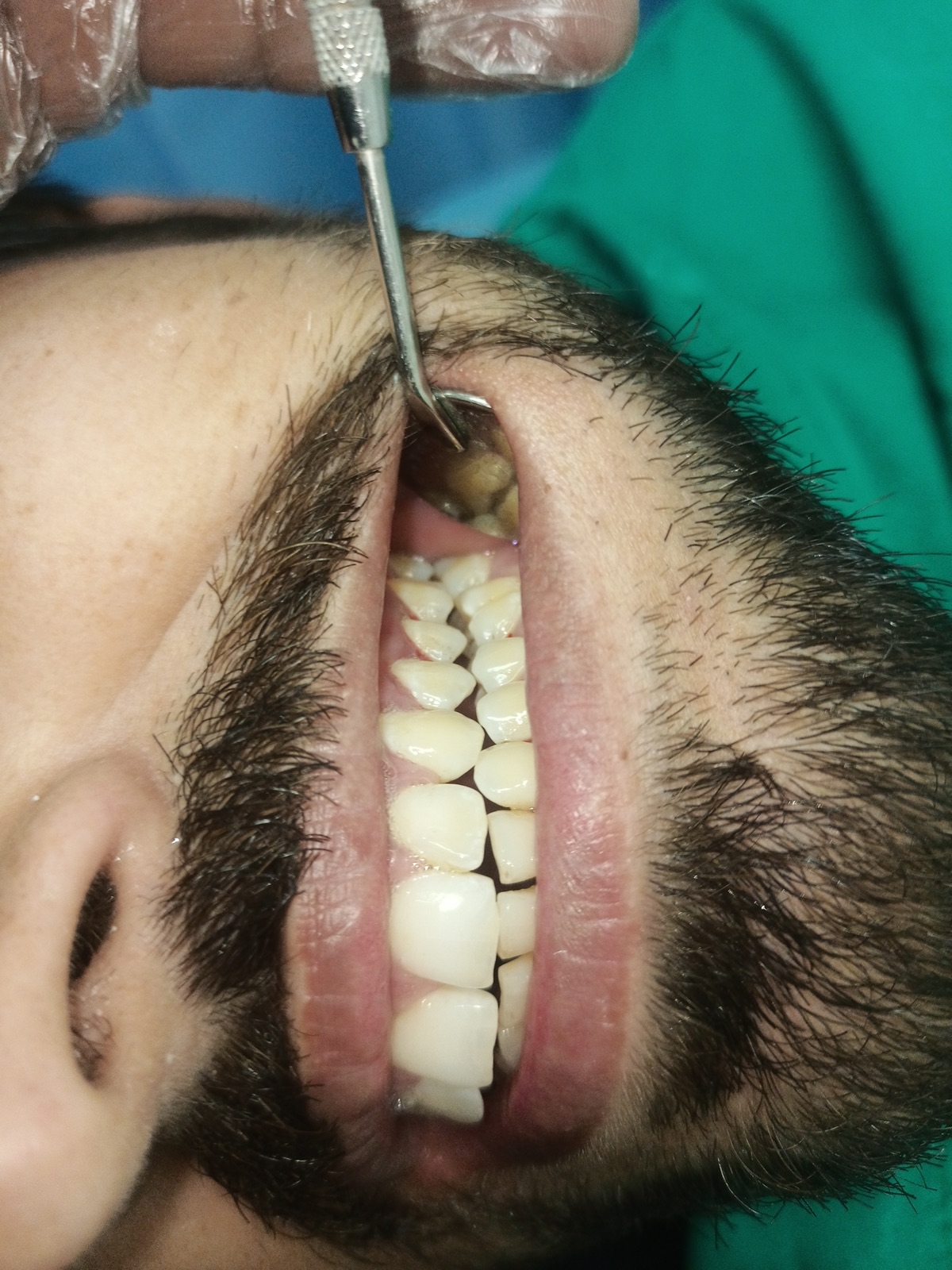
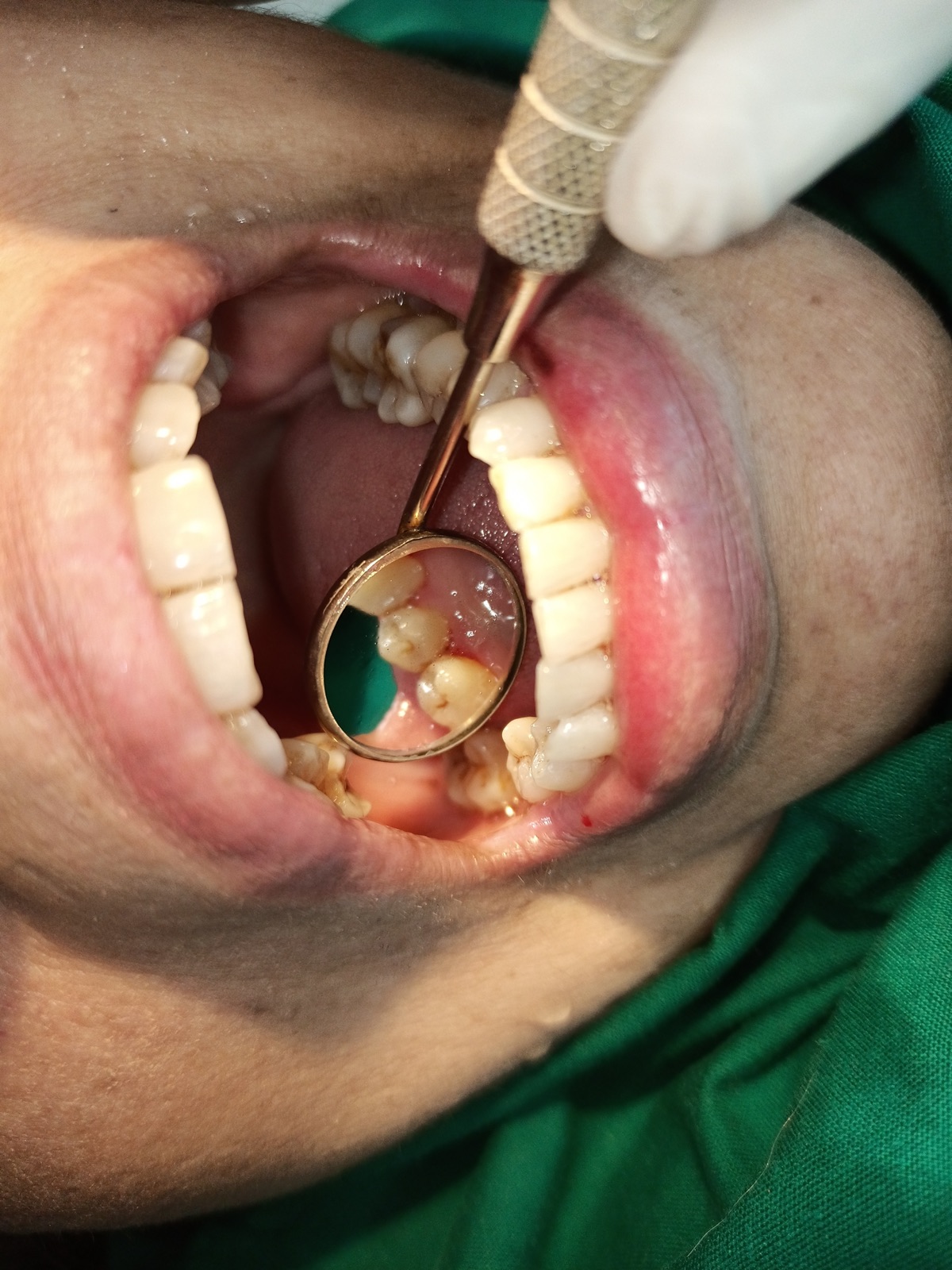
Long-form case studies from our patient archive — including patients who avoided extraction entirely once their gum disease was treated. Every photo was taken in our Engineers Town clinic with patient consent.
Four ways to pay for your extraction work.
We do not want cost to be the reason a painful tooth stays in. The four payment paths below cover almost every patient's situation — discussed openly at the consultation, no pressure, no awkwardness, and especially helpful for multiple-tooth IV sedation cases.
Treatments, problems, and terminology.
Related treatments
Take it out. Painlessly.
Book a free 15-minute consultation. We'll examine the tooth, take any X-ray needed, hand you a written quote — and you decide from there. There is no pressure to extract the same day, and there are no hidden charges if you do. Same-day emergency slots available for active swelling.