How a 22-year-old Lahore software engineer kept his teeth a problem he never had
Mr. Salman Khan booked his first professional cleaning at 22, before any symptom showed up. No bleeding, no pain, no decay, no calculus — just the everyday film of plaque and microscopic stain that builds up no matter how well you brush. His older brother, a doctor, had told him this would be the easiest dental visit of his life. He was right. This is the full story of the cleanest case in our archive — what we found, what we did, and the un-glamorous arithmetic of preventive maintenance.
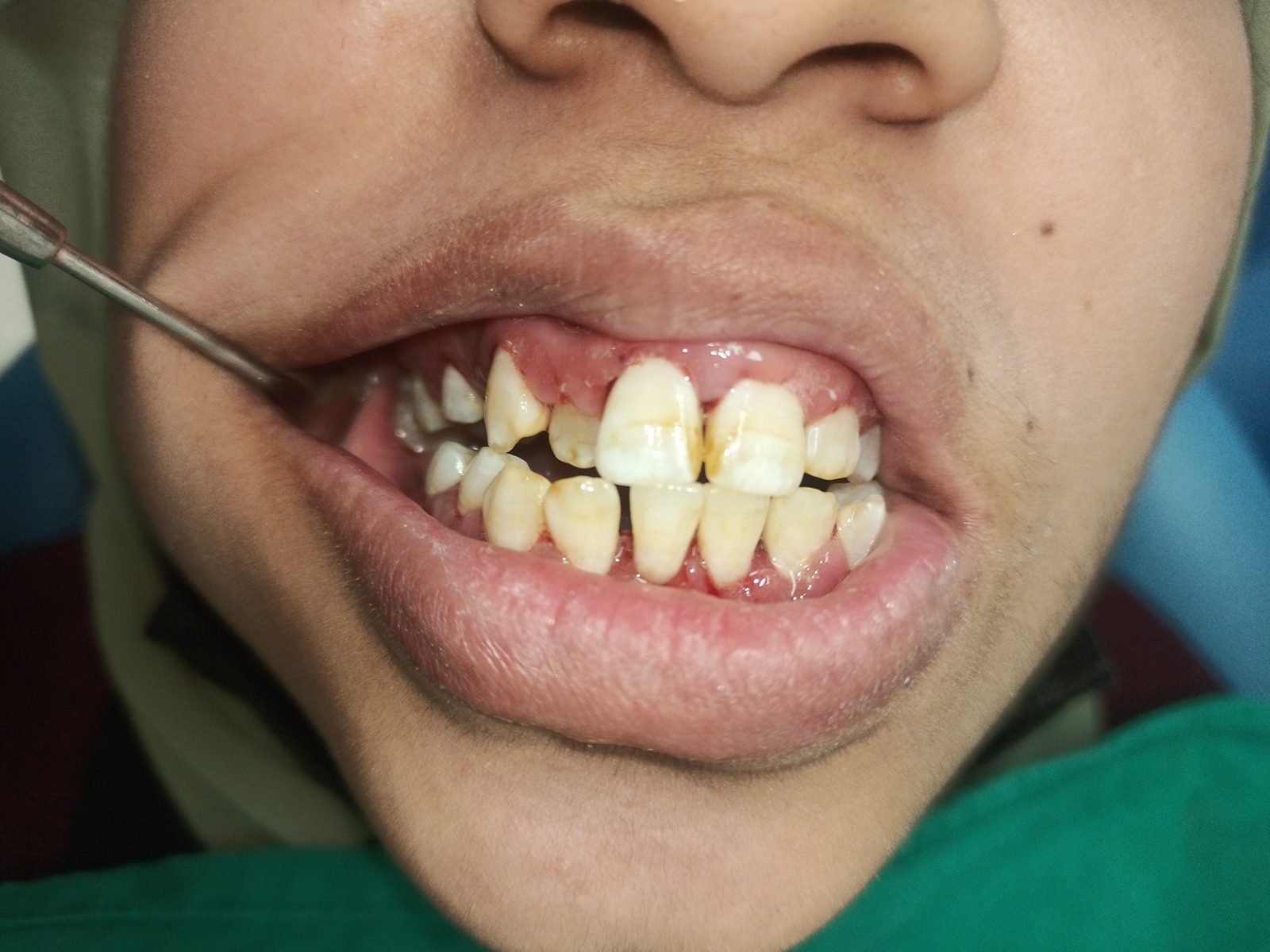
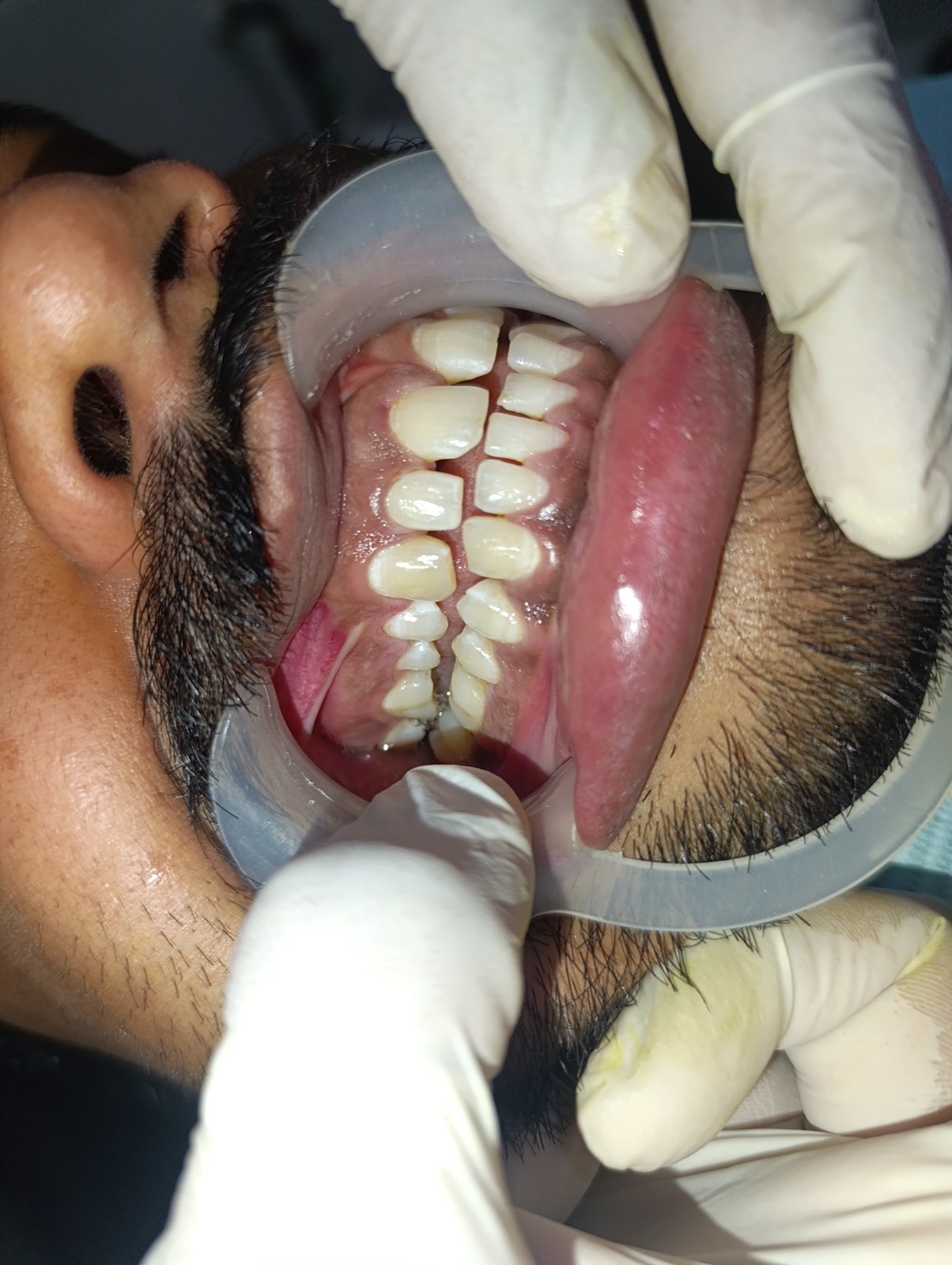
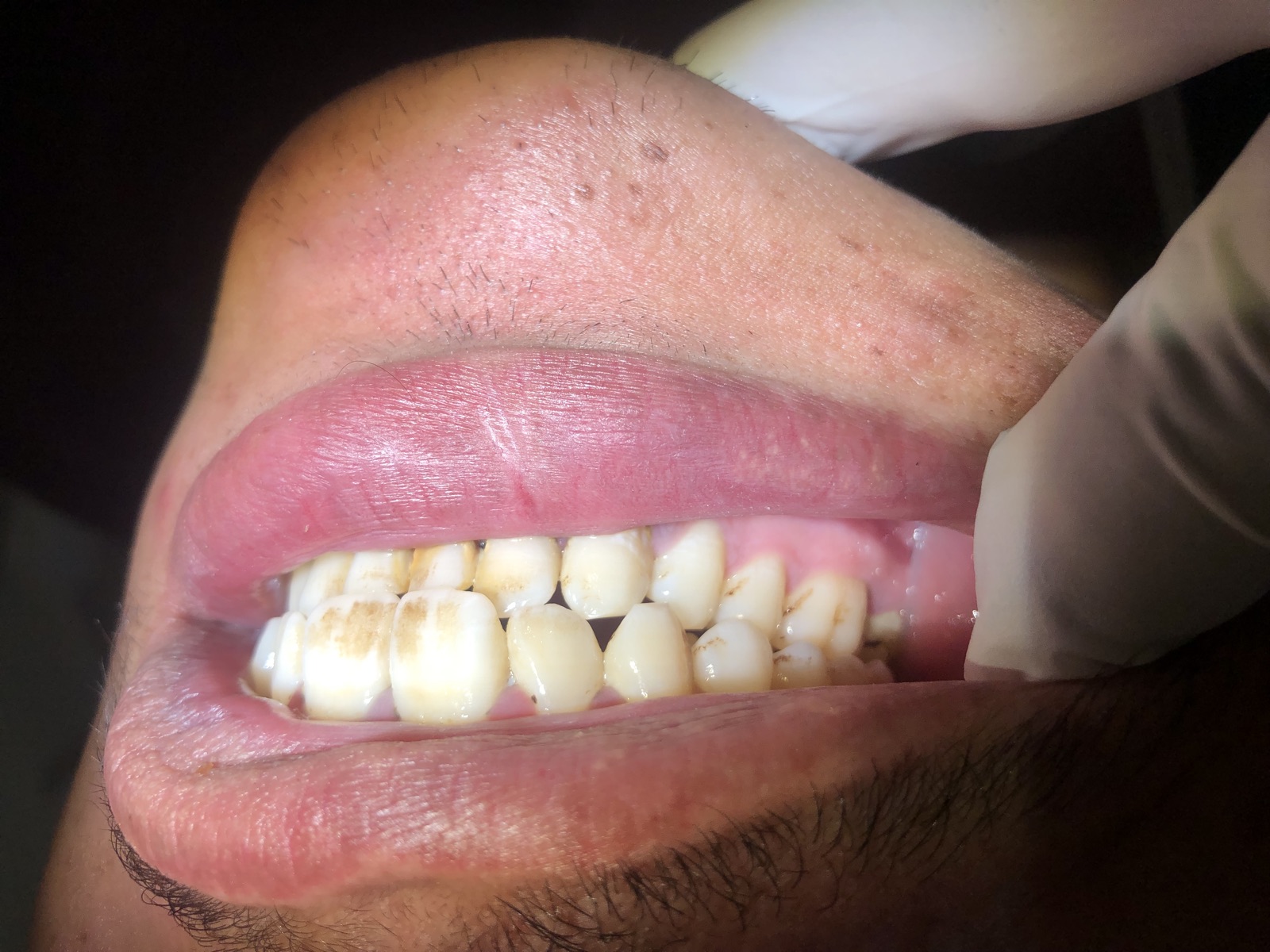 Before
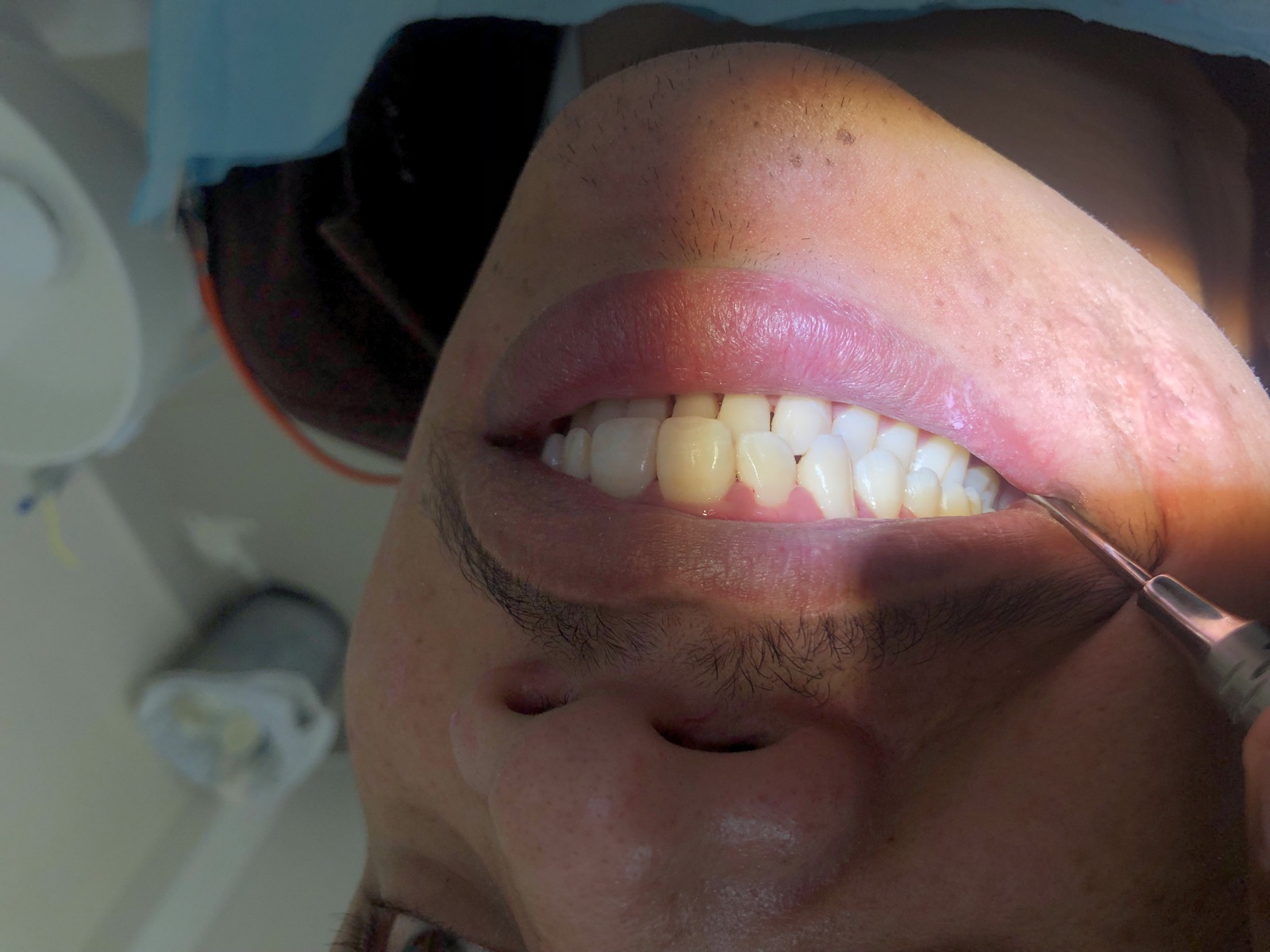 After
AfterThe patient who arrived before disease did.
Most of the patients in this archive walked in with a complaint — bleeding, stain, breath, pain. Mr. Khan walked in with none of those. He is here because his older brother told him to come, and because he is the kind of 22-year-old who actually listens to that advice.
Mr. Salman Khan is a junior developer at a Lahore tech startup. He is twenty-two. He brushes twice a day, with toothpaste, with a soft-bristled brush, and has done so for years. He flosses sometimes — by his own honest description, "mostly weekends." He drinks two cups of coffee a day at the office and the family chai with breakfast. He has never had a filling, never had a cavity, never had a single dental complaint of any kind.
None of this is unusual for a careful young professional. What is unusual is that he sat himself down at his work computer, searched for a dental clinic in Engineers Town, and booked a free 15-minute consult on a Saturday morning — for absolutely no reason. No bleeding, no pain, no breath complaint, no stain that would have shown up in a photograph from a normal distance. He had simply never had a professional cleaning, and his older brother — a doctor in Karachi — had been telling him for two years that this would be "the easiest dental visit of your life."
When we asked what finally pushed him to book, he laughed and said it was nothing dramatic. He had been reading something about preventive medicine that morning. He had a clear two hours on the calendar. He decided he would rather come in now and find out everything was fine than come in at 35 with five years of accumulated something to clean up. Which is the exact mental shift this entire archive is trying to produce.
The first appointment ran an hour. We took the standard six photographs from the angles we use for every patient. We charted the gum at six points around every tooth — a process called periodontal charting — and ran a bitewing X-ray on each side. He could see the screen the entire time. We talked through what we were looking at out loud as we charted, because that is how a 22-year-old learns to read his own mouth for the next forty years.
Probing depths two millimetres or less, all twenty-eight teeth. Bleeding on probing zero of six sextants. No decay on any chewing surface, no shadows on the X-ray, no bone loss anywhere on the chart. The cleanest reading we have published in this archive, by a fairly clear margin. We sat back and told him so.
He looked relieved. We told him the cleaning itself would take about 35 minutes — about five minutes of air-flow polish for the surface stain, twenty-two minutes of light ultrasonic scaling to disrupt the plaque film at the gum line, and a final eight-minute polish — and that he would not need any anaesthesia at all. He took the appointment for the same Saturday afternoon. He was back at his desk before the Friday his colleague had booked the week off.
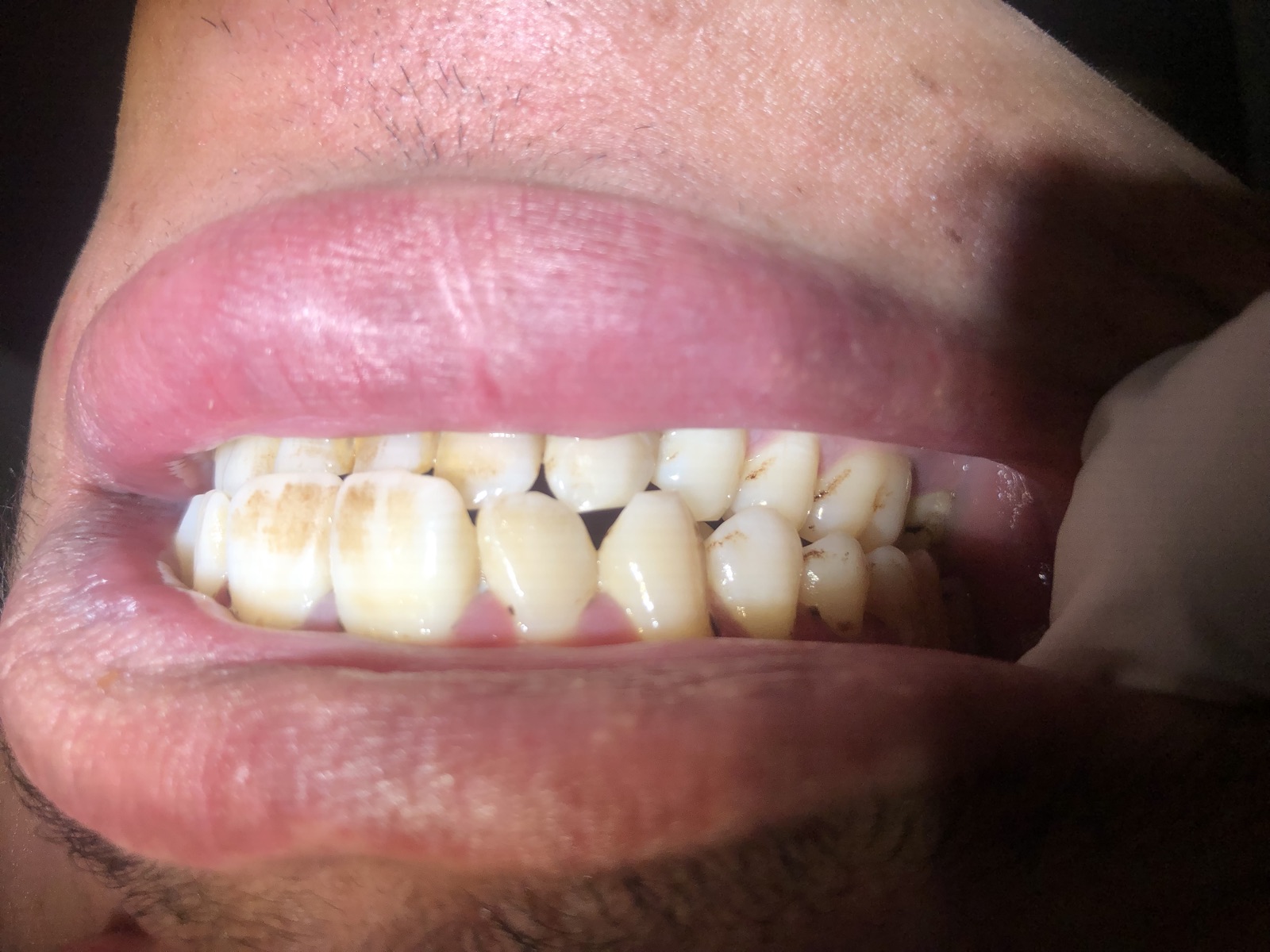
Four observations — and a quietly perfect chart.
The findings on this case are not dramatic. They are, in the un-glamorous way that good preventive medicine always is, exactly what they should be at 22 if a patient is doing his home care well.
A light film of plaque — easily lifted
Plaque is the soft, almost invisible film of bacteria that forms on every tooth, every day, on every person. By the morning of his appointment, Mr. Khan had a thin, microscopic layer along the gum line and in the small grooves of his back teeth. This is not the thick, brown tartar most patients associate with the word "plaque." It is colourless, soft, and easy to lift off in a single ultrasonic pass. The reason a toothbrush at home does not get all of it is simple geometry — the bristles cannot bend into the contours of every surface. A professional cleaning, twice a year, fills exactly that gap.
Mild surface stain — barely visible
He drinks two cups of coffee a day at the office and the family chai with breakfast. That is enough to lay down a microscopic film of pigment on the front teeth, even when the toothbrush is doing its job well. The stain on his teeth was the kind you only see if you compare a "before" photo to an "after" photo side by side under the same light. It came off entirely with a five-minute air-flow pass. To put this in context: most of our heavier-stain patients arrive with stain that has been hardening for ten to fifteen years. His was the same chemistry, on a much shorter timeline, on much cleaner enamel.
No calculus, no decay, no bone loss
We took a periapical X-ray of the lower-front region — the area where calculus first builds up in most patients — and a bitewing on each side. The bone level around every tooth was exactly where it should be. No decay on any chewing surface, no soft spots in the contact areas between teeth, no shadows on the X-ray. This is a textbook clean diagnostic chart for a 22-year-old. It is also, frankly, rare. Most patients who have not seen a dentist before their twenties arrive with at least one small filling already overdue. He had none.
Periodontal health: excellent
When we charted his gums at six points around every tooth, all twenty-eight teeth came in at probing depths of two millimetres or less, with zero bleeding. Zero. This is the gold-standard reading for a young adult. It is not the reading we usually publish on this archive, because most of our cases involve some inflammation — by definition, that is why those patients walked in. Mr. Khan did not walk in because of a problem. He walked in to keep the absence of one. The chart proved he had succeeded.
Four steps. All in 35 minutes.
Every step was explained before it happened. He could see what we were doing in a small mirror at any point. There was no rush — but there was, equally, nothing complicated to do.
A quick exam + photographs
We took the standard six photographs from the same angles we use for every patient — frontal, lateral on each side, and three close-ups of the lower-front, upper-front and posterior surfaces. Six-point charting around every tooth. A bitewing X-ray each side. The whole exam phase ran five minutes — the fastest in our archive, because there was nothing to chase down.
~ 5 minNo anaesthesia — straight to scaling
For routine scaling on a healthy mouth, no numbing is needed at all. We did not even apply a topical gel. The probing depths were within physiological range, there was no inflammation, and the deposits we were lifting off were soft, not hard. He sat in the chair, took a sip of water, and we started.
~ 0 minAir-flow polish + light ultrasonic
We led with the air-flow handpiece on the buccal surfaces — a fine spray of sodium-bicarbonate powder under controlled pressure that lifts the microscopic stain off without touching the enamel underneath. Then a light ultrasonic pass, low power, continuous water cooling, to disrupt the soft biofilm at the gum line. Order: upper right, upper left, lower left, lower right. Twenty-two minutes start to finish.
~ 22 minFinal polish + recall on calendar
A fine, low-abrasive paste applied with a slow rubber cup gives the enamel its glassy reflectance back. We retook the same six photographs so he could compare to the morning. We sized him for a TePe size 1 interdental brush for the slightly tighter contacts on the lower-front teeth. The next visit went straight onto the calendar before he stood up — six months from the day, last week of September.
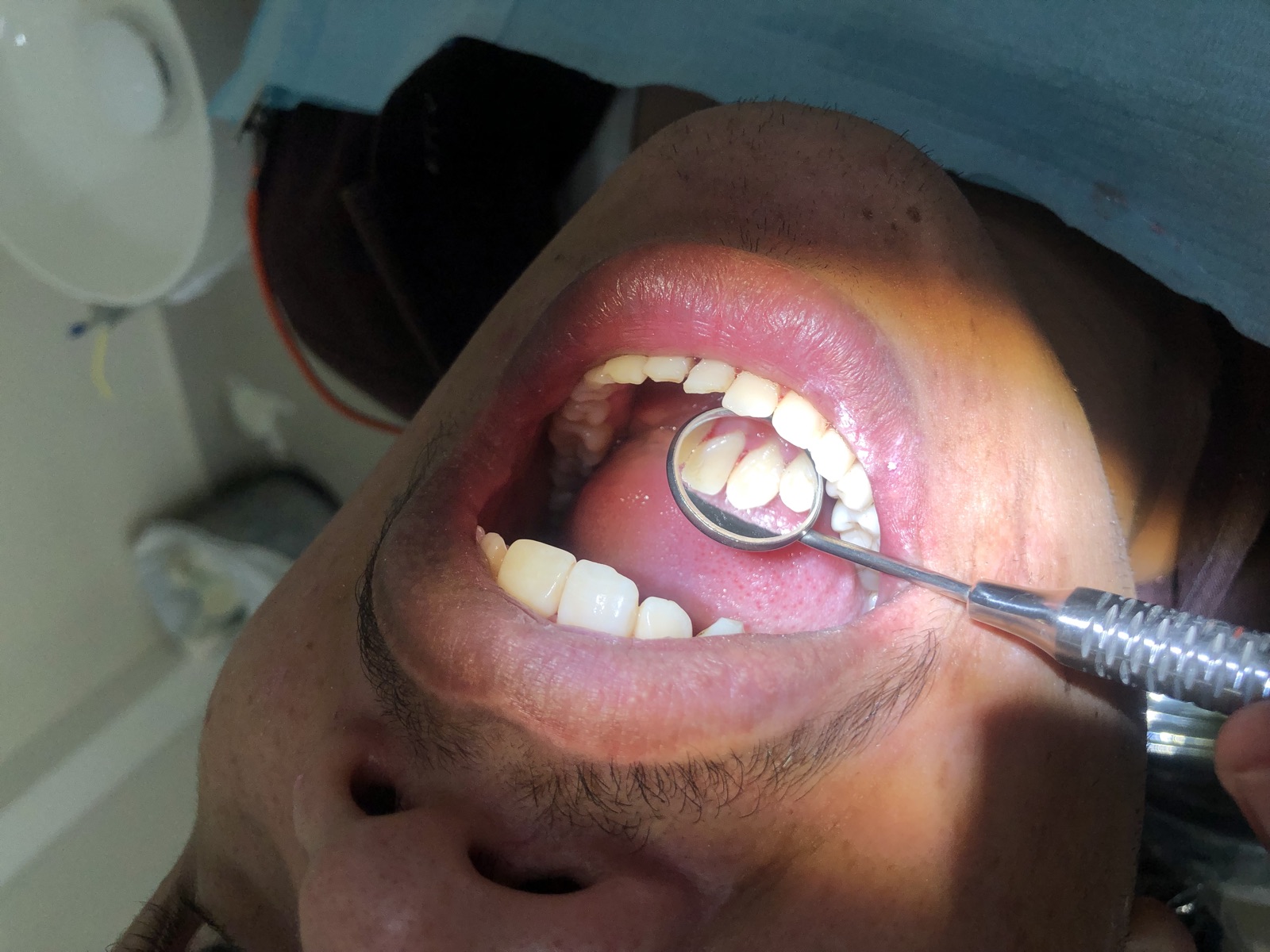
~ 8 min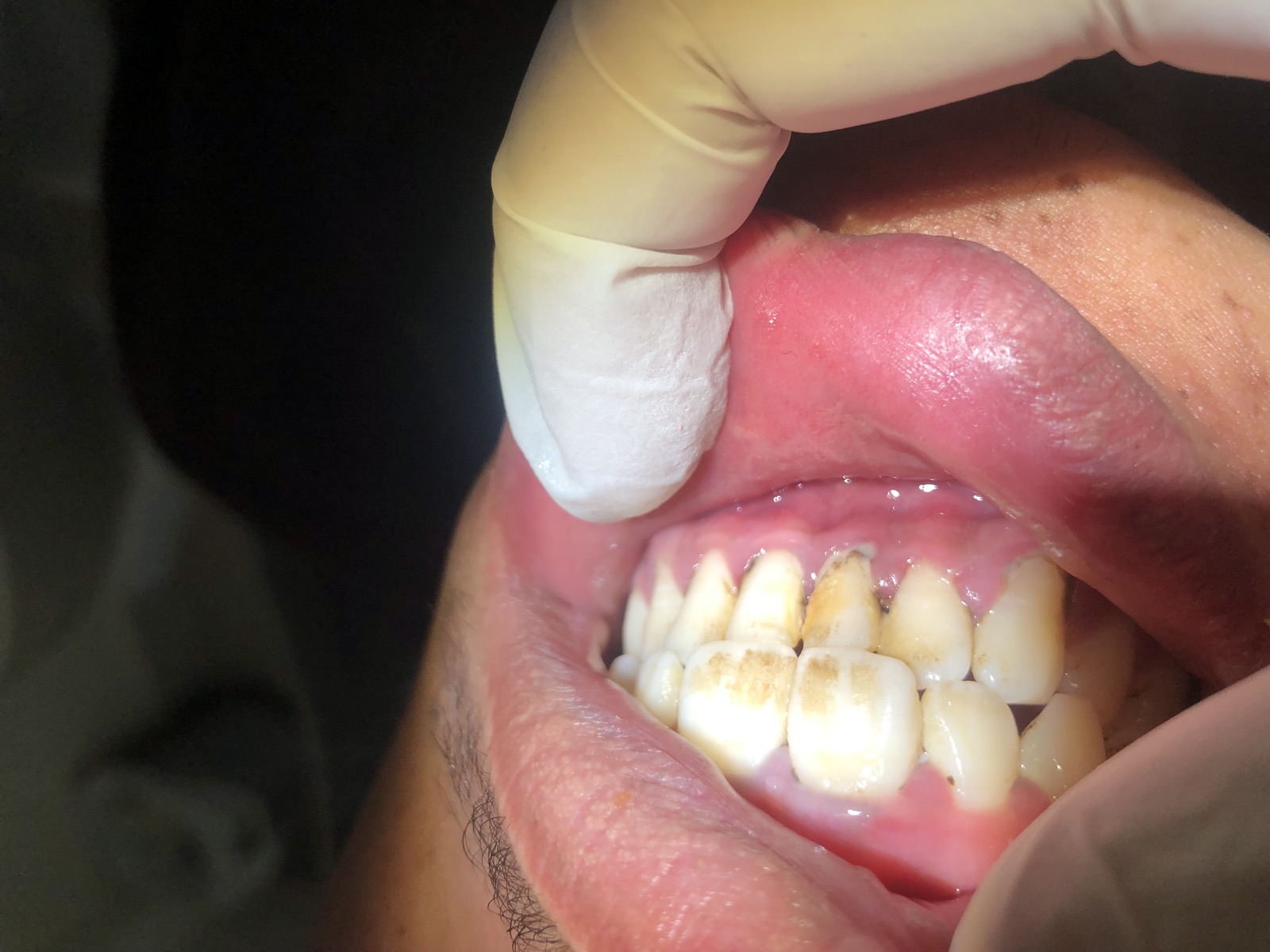 During — ultrasonic
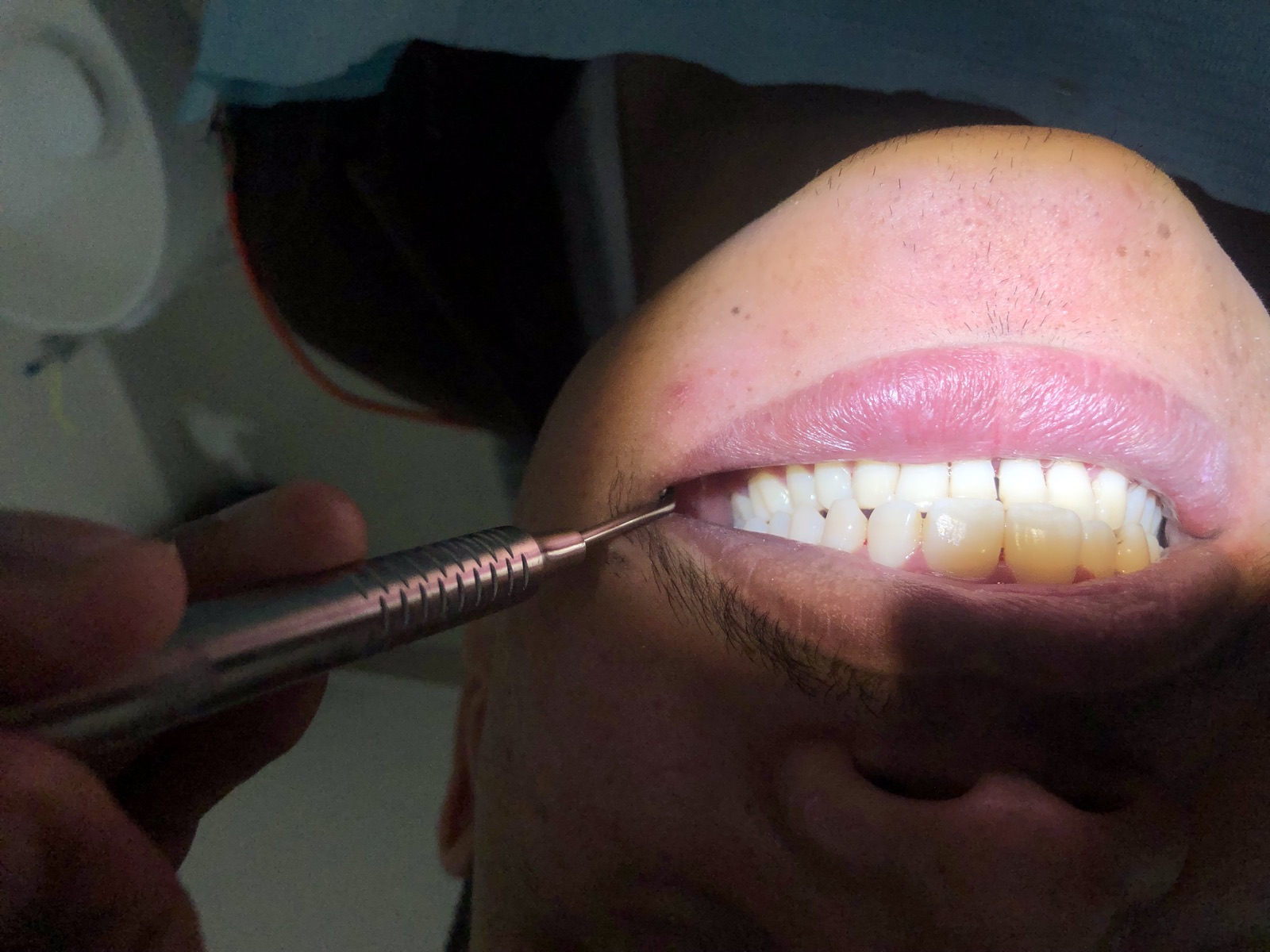 After — final polish
Same patient. Same chair. Same Saturday.
Drag the divider across the photo to compare. Both photos were taken with the same camera and lighting inside our Lahore clinic — "before" right as he sat down, "after" before he stood up. The difference is subtle, deliberately. That is what a maintenance scale looks like on a well-kept mouth.
BeforeAfterWhy even a perfect brusher needs this twice a year.
Patients often ask why a clean is necessary if home care is good. The honest answer has three parts. None of them are about your toothbrush technique.
A brush bristle cannot reach every surface
This is a question of geometry, not effort. Even a perfectly placed brush bristle leaves micro-gaps along the gum line and in the contact area between two teeth. By the morning of his appointment, Mr. Khan had a thin film of soft plaque sitting in exactly those micro-gaps. A brush is mostly able to reach about 65% of the tooth surface — floss, interdental brushes and a professional clean cover the rest.
Plaque becomes tartar in 24 to 48 hours
The soft plaque a brush misses does not stay soft for long. Saliva mineralises it into tartar — a hard, cement-like deposit — within one to two days. Tartar at this point cannot be brushed off with any toothpaste in the world. That is what an ultrasonic scaler is for. The reason he had only a trace of tartar at 22, and not the dense band most patients have at 35, is that he came in this year and not in thirteen years.
Coffee and chai stain enamel below the surface
Tannin molecules in tea and coffee are small enough to slip into the microscopic pits of enamel. Once inside, they bond chemically. A toothbrush cleans the outer surface. It cannot reach pigments that have travelled into the enamel. The air-flow handpiece — fine sodium-bicarbonate spray, controlled pressure — does reach them and lifts them out without damaging the surface. He had three pigment exposures a day for years; the air-flow took five minutes.
Five questions our young-adult patients always ask.
These are the worries we hear most often from patients in their twenties, in the words they actually use. Tap any one to read the long answer.
I have no symptoms — do I really need a cleaning at 22?+
Yes — and the fact that you are asking this question is exactly why. The patients who book a cleaning when nothing is wrong are the patients who never need a complicated dental visit later. The ones who wait for symptoms are the ones who walk in at 35 with a problem that took five years to build up and will take three visits to undo.
Plaque becomes tartar in 24 to 48 hours, even with perfect brushing, in the small areas a brush cannot reach — behind the lower front teeth, in the back corners of the upper molars, between every contact. By 22, even on a perfect home-care routine, that tartar has been forming and reforming for several years. A single 35-minute clean removes it before it triggers any of the consequences — gum inflammation, bone loss, decay between teeth.
Mr. Khan's chart was the cleanest we have seen in months. The reason it was that clean is that he came in. The reason it stays that clean for the next forty years is that he keeps coming in.
Will the cleaning weaken my enamel or make my teeth more sensitive?+
No. Routine scaling does not remove enamel. The ultrasonic tip vibrates at a frequency tuned specifically to fracture the mineralised plaque off the tooth surface — it is not a sandblaster on the tooth itself.
What does sometimes happen, in patients with thicker tartar than Mr. Khan had, is that the enamel underneath the tartar is exposed to cold air for the first time in years and feels sensitive for one to three days. He had no calculus to speak of, so he had no sensitivity at all. He drank a glass of cold water in the lobby on his way out and reported nothing.
The myth that scaling weakens teeth comes from one specific situation: when calculus has been holding loose teeth in place for years and is suddenly removed, the looseness becomes obvious. The scaling did not cause it. The gum disease underneath did. Mr. Khan does not have any of that.
How painful is the cleaning itself? Will I need an injection?+
Routine scaling on a healthy young adult — which is exactly Mr. Khan's situation — is probably the most painless dental procedure on the menu. No injection, no topical numbing gel, no sharp sensation at any point. The ultrasonic tip vibrates gently and continuously cools the tooth with water. The air-flow handpiece feels like a fine cool spray.
The single sensation patients sometimes describe is a high-frequency tickle — the ultrasonic vibration translating to the tooth. It is unfamiliar the first time and absolutely not painful. He smiled through most of the appointment and asked questions while the handpiece was running.
The 1-in-20 cases where we use a small local anaesthetic are deep-scaling cases for periodontitis, where deposits sit four or five millimetres below the gum line. Mr. Khan was on the opposite end of that spectrum.
How often should I come back? Is six months a marketing number?+
Six months is not a marketing number. It is the interval at which tartar starts to form again at any meaningful rate, even on a perfect home-care routine. Every dental association in the world that has studied recall intervals — the British Society of Periodontology, the American Dental Association, our own PMDC guidelines — converges on the same window for non-disease patients: six months.
Patients with active gum disease come more often, sometimes every three months. Patients with very low risk and excellent home care can stretch to nine months. We will reassess Mr. Khan's interval at each visit based on what his chart shows.
What we will not do is suggest he come back sooner than six months unless the chart actually changes. There is no extra benefit to doing this every quarter. There is, however, real benefit to never missing the six-month mark.
How much does this cost? What about future visits?+
A standard scaling and polishing at Odonto is PKR 4,500, all-inclusive. That covers the full chart, the X-rays we took, the air-flow polish, the ultrasonic pass, the rubber-cup polish, and the printed aftercare sheet. The free 15-minute initial consultation that he booked through WhatsApp covered the photography and the first part of the chart, so he was not double-charged.
Mr. Khan paid PKR 4,500 on the day. There were no add-ons, no upsells, no extras. We do not earn referrals at Odonto by inflating maintenance bills.
His next six-monthly visit will be the same fee. If, in the future, anything changes on his chart that warrants additional work — a small filling, a deeper clean, a sensitivity treatment — we will stop, show him the X-ray, explain why, and write a separate quote before we proceed. Nothing happens without his sign-off.
The follow-up visits.
One scaling is not the end of a case — it is the start of a maintenance cycle. Every patient at our clinic gets the same follow-up structure: a quick check at one month over WhatsApp, and a full repeat appointment at six months. Here is how Mr. Khan's went.
No re-accumulation of biofilm at the gum line. Patient reported that brushing felt noticeably smoother. No sensitivity at all despite the air-flow component of the polish — entirely as predicted for a healthy young mouth with no exposed dentine.
He messaged on WhatsApp at the four-week mark. The flossing routine had moved from weekend-only to four or five nights a week — better than where we started, not yet at the every-night target. Photographs unchanged from immediate post-op. The interdental brush was being used nightly without a miss. We told him to keep at it.
He returned in the last week of September for the six-month recall. Mild biofilm re-accumulation as expected. Routine cleaning completed in twenty minutes — even faster than the first visit. Bleeding on probing remained zero of six sextants. Same six photographs taken so we could compare against April. He paid PKR 4,500 again. His next visit is on the calendar for March 2026.
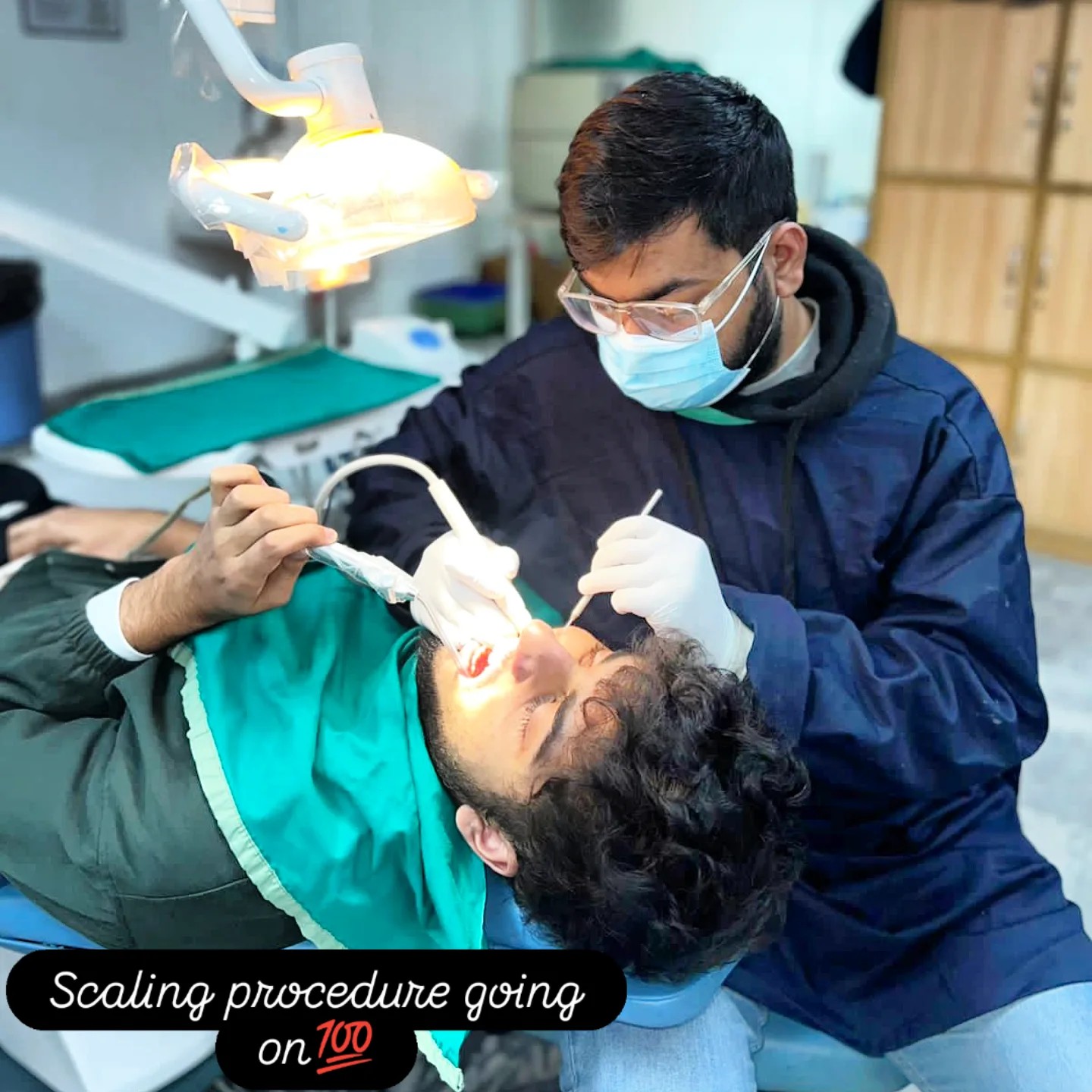
Dr. Mian Momin Ahmad
“Preventive maintenance is the un-glamorous form of dental care. There is no dramatic before-and-after to publish on Instagram, no story of relief, no pain that disappeared. There is just a 22-year-old who walked in with healthy teeth and walked out with healthy teeth, 35 minutes later, having spent PKR 4,500. The patient who books at 22 prevents the visits that would have been needed at 42, 52, 62. The arithmetic is small now and stays small. The arithmetic is brutal if you wait. I publish this case precisely because it lacks drama — that is what good dental care should look like for everyone, and it is what every patient who comes in twice a year for the next forty years is choosing.”
Six small habits that hold the result.
A clean is not the end of the story — for a patient this young, it is the very beginning of a forty-year maintenance trajectory. These are the only six habits we asked Mr. Khan to commit to. None of them require buying anything expensive.
Keep brushing twice a day, two minutes, soft brush
Mr. Khan was already doing this. We asked him not to change anything — same Oral-B sensitive brush head, same two-minute timer on the phone, same fluoride toothpaste. The single thing we did suggest was to switch from circular scrubbing to small, gentle, modified-Bass strokes at the gum line. Hard scrubbing, even on a healthy mouth, slowly wears the gum away over years and exposes the root surface, which is yellower and more sensitive than enamel. Gentle is permanent. Hard is gradual damage that does not show up until your forties.
Push flossing from "sometimes" to "every night"
This was the only weakness in his routine and it is the one habit, more than any other, that decides whether a 22-year-old still has all his original teeth at 65. Flossing is not optional in the long run. The space between teeth is where 80% of decay starts because a brush bristle cannot reach there. We asked him to floss every night, standing at the bathroom mirror, after the second brushing of the day. Once it becomes a 90-second habit, it stops feeling like a chore. He committed to one month of nightly flossing as a trial.
Rinse with water after every cup of coffee or chai
He drinks two coffees and at least one chai a day. That is three pigment exposures per day, every day. A five-second rinse with plain water immediately after the cup is finished removes most of the tannin film that would otherwise sit on the teeth and oxidise into stain over the next 24 hours. This is not optional advice — it is the single habit that decides whether his teeth at 25 still photograph the same as today. Three rinses a day. No equipment, no cost.
Add a TePe size 1 interdental brush at the lower front
His lower-front contacts are slightly tighter than average and the floss snaps through them with a firm pop. A TePe size 1 brush — the smallest one made — slides through the same contacts more easily, lifts more debris, and is gentler on the gum. Once a day, last thing at night, after the floss. He left the clinic with a four-pack so he would not run out before the recall.
Skip the whitening toothpaste — your teeth are already there
His enamel is at its natural shade, which is exactly where most adults try to get to with whitening trays. There is nothing for whitening toothpaste to do here, and the mild abrasive grit in those pastes works against you on freshly polished enamel. We asked him to use a regular fluoride toothpaste — Sensodyne Pronamel or Colgate Total — for at least a year before he even thinks about anything cosmetic. The tooth he photographs at his recall in September is the tooth we want to see at every recall after that.
Six-month recall — already on the calendar
Tartar reforms slowly, even on the cleanest mouth. Six months is the right interval for a non-disease patient — long enough that home care is meaningfully tested, short enough that nothing severe accumulates. Each follow-up clean takes 25 minutes, costs PKR 4,500, and we take the same six photographs so he can see the trend year over year. His next visit is on the calendar for the last week of September.
Book at 22. Not at 42.
The patients who book a cleaning at 22, with no symptoms and no complaint, are the patients who never need a complicated dental visit at 52. The arithmetic is small now, and it stays small. The arithmetic is brutal if you wait. None of this is a scare tactic — it is the timeline we see, in our chair, in this clinic, every week.
What "arriving on time" actually buys you, in plain terms:
The fix at 22 is a 35-minute appointment. The fix at 52 is rarely as simple. That is the case for booking now, even if — especially if — nothing hurts.
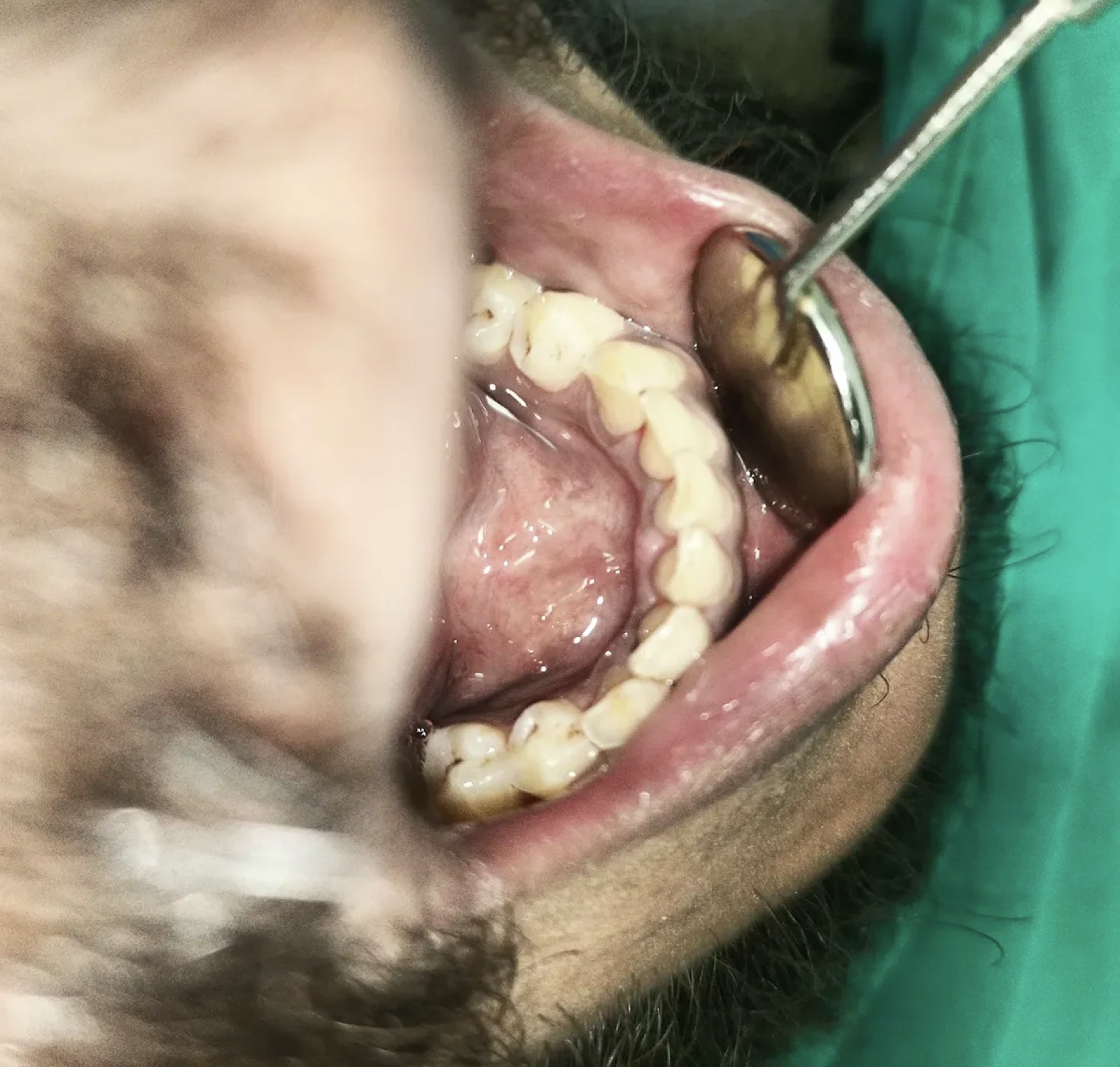
More on scaling, and the maintenance routine behind it.
Three more patients like Mr. Khan.
Every case in this archive is a real Odonto patient with their consent. Names are accurate where the patient was happy to share them, age ranges are real, and every photograph was taken in our Engineers Town clinic.
Want to be Mr. Khan's kind of patient?
The first 15 minutes are free. We will examine your teeth, take any photos needed, and put a written quote in your hand. There is no pressure to book the cleaning the same day, and there are no hidden charges if you do.