Dental Implants in Lahore: Cost, Procedure & Brands
Dental implants in Lahore are the long-term, bone-anchored fix for a missing tooth, a failing bridge, or a whole arch of teeth on the way out. At Odonto, we place implants in seven configurations — single-tooth, multi-tooth bridge, full-arch overdenture, All-on-4, All-on-6, mini, and zygomatic referrals — using two brand tiers: Korean Dentium and Osstem, and European Straumann and Nobel Biocare. The full dental implant procedure spans 3-6 months from the surgery to the final crown, planned end-to-end on a 3D CBCT scan. The dental implant cost in Pakistan at Odonto starts from PKR 90,000 for a single Korean implant — written quote on day one, no hidden charges. A tooth implant at our clinic is the most permanent permanent tooth replacement you can choose in 2026.
 PMDC certified
A titanium root that becomes part of your jaw.
A dental implant is a small, sterile titanium screw placed in the jawbone where a tooth is missing. Over 3-6 months, the bone biologically grows onto the titanium surface — a process called osseointegration — and the implant becomes a permanent part of your skeleton. Once integrated, it carries a crown, a bridge, or an entire fixed full-arch.
Unlike a bridge or denture, an implant restores both the tooth above the gum and the root below it. That is the reason it preserves jawbone, leaves neighbouring teeth completely untouched, and routinely lasts 15+ years — often a lifetime.
At Odonto we work with two implant tiers — Korean (Dentium and Osstem) and European premium (Straumann and Nobel Biocare) — and seven prosthetic configurations from a single tooth to All-on-6. The video on the right walks through how an implant is placed, how it integrates, and what the final crown looks like.
Six signs an implant is the right call.
Implants are not the only way to replace missing teeth — bridges and dentures both have their place. But when one of these signs is present, an implant preserves more bone, lasts longer, and costs less over the lifetime of the case than any alternative.
A single missing tooth with healthy neighbours
Both adjacent teeth are intact and unrestored. Cutting them down for a traditional bridge would damage healthy structure. An implant fills the gap without touching the neighbours — and the bone underneath stays preserved.
An old failing bridge
A bridge that has loosened, where an abutment tooth has decayed, or where the pontic has fractured. This is the moment to switch to implants and stop the cycle of one-tooth-fails-then-its-neighbour-fails.
A loose, slipping or sore denture
A denture that clicks while talking, slips when eating, or rubs the gum into ulcers can be transformed by 2-4 implants holding it in place — an implant-retained overdenture is often the quickest quality-of-life upgrade in dentistry.
Advanced jawbone loss on X-ray
Every month a tooth is missing, the bone underneath shrinks. A CBCT scan tells us exactly how much bone is left. The earlier the implant, the less likely you need bone grafting — wait too long and grafting becomes unavoidable.
Difficulty eating with multiple missing teeth
When chewing has been compromised for years and you have started avoiding meat, salad, or fresh fruit, an implant bridge or All-on-4 restores full bite force — closer to natural teeth than any removable denture can deliver.
A whole arch about to fail
Several remaining teeth that are loose, broken, or beyond saving. Rather than extracting one at a time and patching with partial dentures, an All-on-4 or All-on-6 replaces the entire arch on a single fixed bridge — one surgical visit, one final result.
Six reasons implants are worth the investment.
An implant is more expensive and slower than a bridge or denture. The six advantages below are why patients increasingly choose implants anyway — they are the most durable, biologically friendly, and life-quality-preserving tooth replacement we can offer.
Permanence — built to last decades
A well-placed implant in healthy bone routinely lasts 15+ years and very often a lifetime. Modern titanium fuses with bone (osseointegration) and becomes biologically part of you. The single most permanent tooth replacement in dentistry.
Preserves your jawbone
A natural tooth root sends pressure signals into the jawbone every time you chew. Without that signal, the bone resorbs — your face shape changes within a few years of tooth loss. An implant restores the signal and stops the bone shrinkage.
No damage to neighbouring teeth
A traditional bridge requires shaping down two healthy adjacent teeth — they become permanently crowned. An implant sits in its own space, leaving every other tooth exactly as it was. The single biggest long-term advantage.
Eat anything — no restrictions
Patients with implants chew steak, naan, raw vegetables, sticky sweets — anything a natural tooth handles. Bite force on a fully integrated implant is comparable to a real tooth and dramatically higher than any denture.
Bone-anchored stability
No clicking, no slipping, no overnight removal. The fixture is screwed into bone and stays there permanently. For long-time denture wearers, the day the implant-supported bridge is fitted is often described as life-changing.
Speech and confidence restored
Front-tooth gaps and ill-fitting dentures both affect how clearly you speak. An implant restores the geometry of the smile and the airflow of speech — patients report friends and family stop asking what changed within a few weeks.
Seven tooth implant options. One that fits your case.
From a single missing tooth to a full upper or lower jaw, every implant case at Odonto falls into one of seven configurations. Each is explained below — pros and cons listed honestly so you can match the option to your bone, your budget, and your long-term goals.
 Most common
Single tooth implant
One titanium fixture replacing one missing tooth, with an abutment and a custom crown on top. The gold standard for a single gap with healthy neighbours — neither adjacent tooth is touched. The most common implant case at our clinic.
2–3 missing teethImplant-supported bridge
Two implants supporting a 3-unit or 4-unit bridge — replacing two or three adjacent missing teeth without using one fixture per tooth. A balance between cost, biology, and long-term durability for multi-tooth gaps.
 Premium full mouth
All-on-4 fixed full arch
An entire upper or lower arch replaced on just four strategically angled implants supporting a fixed bridge. The two posterior fixtures are tilted to engage the densest available bone, often avoiding sinus lifts and major grafts. Life-changing for full-mouth or long-time denture-wearing patients.
Maximum stabilityAll-on-6 fixed full arch
A fixed full-arch bridge supported by six implants instead of four — the choice when the bone is dense enough and the patient wants the maximum redundancy. Slightly higher cost, slightly faster final loading, and a backup if any single fixture were to fail in future.
Denture upgradeImplant-retained overdenture
Two to four implants stabilise a removable overdenture — a major upgrade from a conventional plate denture for a fraction of the cost of a fixed bridge. Snaps onto the implants, comes out for cleaning at night. The right choice for budget-conscious full-mouth patients.
Limited useMini implants
Smaller-diameter titanium fixtures — typically used to stabilise a lower denture in patients with very thin jawbone where a standard implant cannot be placed without grafting first. Useful tool in specific cases, but not a substitute for a standard implant.
Specialist referralZygomatic implants
Extra-long implants anchored in the cheekbone (zygoma) rather than the upper jawbone — used when the upper jaw has lost so much bone that even an All-on-4 cannot be placed. We refer these cases to specialist oral and maxillofacial centres equipped for the surgery.
Transparent pricing. No hidden charges.
Dental implant cost in Pakistan at Odonto Lahore is fixed per configuration and per brand. Prices below are all-inclusive: CBCT-led planning, the implant fixture, surgery, abutment, and final crown or bridge. The free 15-minute consultation always includes a 3D CBCT scan and a written quote before any tooth or bone is touched.
| Implant configuration | Price (Korean / European) |
|---|---|
| Single tooth implantFixture + abutment + crown | PKR 90,000–130,000 PKR 200,000–280,000 |
| Korean implant only (no crown)Fixture + abutment, crown billed separately | PKR 50,000–70,000 — |
| 3-unit implant-supported bridge2 implants + 3-unit prosthesis | PKR 250,000–400,000 PKR 450,000–650,000 |
| Implant-retained overdenture2 implants + denture | PKR 200,000–350,000 — |
| All-on-4 single arch4 implants + fixed full-arch bridge | PKR 600,000–900,000 PKR 1,200,000–1,800,000 |
| All-on-6 single arch6 implants + fixed bridge | PKR 800,000–1,200,000 PKR 1,600,000+ |
| Bone graft (per site)When CBCT shows insufficient bone | +PKR 25,000–50,000 |
| Sinus liftUpper-back jaw only | +PKR 50,000–100,000 |
| CBCT scan3D bone-mapping scan | PKR 6,000–12,000 |
| Surgical guide (complex cases)3D-printed positioning guide | +PKR 15,000–30,000 |
For a single tooth implant with korean (osstem/dentium) fixtures.
Ten factors that shape your dental implant price.
Implant pricing in Lahore looks confusing because the spread is so wide — PKR 60,000 at one clinic, PKR 280,000 at another, both calling it the same thing. The ten factors below explain almost the entire difference.
Implant brand
The single biggest factor. Korean brands (Dentium, Osstem) cost roughly half what European brands (Straumann, Nobel Biocare) cost. Both are clinically proven — the choice depends on bone, bite, and budget.
Number of implants needed
A single tooth implant is one fixture. An implant-supported bridge is two. An All-on-4 is four. An All-on-6 is six. Each fixture carries its own surgery, abutment, and component cost.
Bone grafting (per site)
If the CBCT shows insufficient bone, a bone graft adds PKR 25,000–50,000 per site. Grafting is sometimes done at the same time as the implant, sometimes 4-6 months earlier. CBCT decides.
Sinus lift (upper-back only)
For implants in the upper-back jaw where the sinus has dropped down, a sinus lift adds PKR 50,000–100,000. All-on-4 protocols are designed to avoid this in 80% of cases by tilting the rear fixtures.
Crown or bridge material on top
The implant crown can be PFM (cheapest), zirconia (mid-tier), or premium ceramic. For full-arch bridges, the prosthesis can be acrylic-on-titanium (cheapest), zirconia hybrid, or full-zirconia (premium).
CBCT scan and surgical guide
A CBCT scan (PKR 6,000–12,000) is included in our consultation. A printed surgical guide (PKR 15,000–30,000) is added for complex multi-implant cases — it makes placement millimetre-accurate.
Immediate vs delayed placement
An immediate implant (placed at the same visit as the extraction) saves a second surgery but is technique-sensitive. Delayed placement after 8–12 weeks of healing is the safer default for most cases. Cost is comparable.
Specialist (oral surgeon / implantologist) vs general dentist
A specialist oral surgeon or trained implantologist charges 15–30% more than a general dentist placing implants. For complex cases — full-arch, severe bone loss, immediate loading — this premium is worth paying.
Government vs private clinic
A government dental hospital can place a Korean implant at a heavy subsidy but with junior-surgeon execution and limited brand choice. Private clinics like Odonto charge market rate but you see a senior implantologist and choose any brand.
Adjacent treatments
Extraction of the failing tooth (PKR 3,000–8,000), scaling and gum stabilisation before surgery (PKR 4,500), or temporary dentures during the healing phase — all itemised on your written quote before any surgery.
Korean Dentium / Osstem or European Straumann / Nobel?
Both tiers are clinically proven, both come with manufacturer lifetime fixture warranties, and both are widely used at Odonto. The honest comparison below is exactly the conversation we have at every consultation.
The right call for the majority of cases.
Korean implant systems are the most cost-effective implants on the global market, with strong 10-year clinical data and a typical price half that of the European brands. Dentium and Osstem combined hold meaningful global market share — these are not budget brands, they are well-engineered implants priced for accessibility.
- ✓Roughly half the price of European brands
- ✓10+ years of solid clinical research
- ✓Manufacturer lifetime fixture warranty
- ✓Right call for routine single-tooth and multi-tooth cases
- ×Less surface technology development than European premium
- ×Slightly less ideal for immediate-load and zygomatic cases
The gold standard for complex cases.
Straumann (Switzerland) and Nobel Biocare (Sweden) are the global research benchmark in implantology — the longest clinical record, the most surface technology development, and the highest premium. Worth the price when the case complexity justifies it.
- ✓Longest clinical research record (decades)
- ✓SLA / TiUnite surface technology — fastest osseointegration
- ✓Best for immediate-load, full-arch, front-tooth aesthetic cases
- ✓Lifetime fixture warranty + premium component ecosystem
- ×Roughly twice the price of Korean equivalents
- ×Often excessive for routine single-tooth cases
Oral surgeon & implantologist or general dentist?
Implants are placed in Pakistan by all three — general dentists with implant training, dedicated implantologists, and oral & maxillofacial surgeons. The right operator is matched to the case complexity, not your wallet. Here's when each is the right call.
Right for routine single-tooth cases with good bone.
An experienced general dentist with a structured implantology course and 100+ implants placed handles the majority of single-tooth cases in Lahore safely and predictably. For a CBCT-confirmed straightforward single implant, this is what you get at Odonto by default — and it is the right level of care.
- ✓Single-tooth Korean implants — routine
- ✓Pricing 15–30% lower than specialist
- ✓Continuity with your usual dentist
Right for complex, full-arch, or compromised-bone cases.
A specialist implantologist or oral surgeon is the right choice for All-on-4, All-on-6, immediate-load protocols, severe bone loss requiring grafting or sinus lift, zygomatic implants, and any front-tooth aesthetic case. We refer within our network when the case complexity warrants it — and we tell you upfront if your case needs one.
- ✓All-on-4 / All-on-6 full-arch reconstruction
- ✓Major bone grafting and sinus lift cases
- ✓Immediate-load protocols and zygomatic implants
Government dental hospital or private clinic?
Both place implants. Surgical sterility matters more for an implant than for almost any other dental procedure — the fixture is going inside bone and staying there for life. Here is the honest comparison so you pick the right setting for your case.
Subsidised, with real trade-offs for implant work.
Lahore's government and dental teaching hospitals — Mayo, Punjab Dental Hospital, the public-sector dental departments — place implants at subsidised fees. For implants specifically, the trade-offs are larger than for fillings or crowns because the surgery requires strict sterility and senior-clinician execution.
- ✓Significantly lower fees on Korean fixtures
- ✓Same baseline implant brands as some private clinics
- ×Long appointment queues — multi-month waits common
- ×Trainees or house surgeons frequently perform the surgery
- ×Limited brand and configuration options (rarely All-on-4)
- ×CBCT often outsourced — separate visit, separate fee
Full menu, senior surgeon, sealed surgical pack.
Private clinics like Odonto charge full market price but you see a senior implantologist on your scheduled date, choose any brand and configuration, and get a written quote before any incision is made. Surgical packs are single-use sealed; instruments are autoclave-sterilised to medical standards before every implant case.
- ✓Senior implantologist executes every surgery
- ✓Single-use sterile surgical packs · autoclave standards
- ✓Korean and European brands · seven configurations
- ✓CBCT scan included free at consultation
- ✓Itemised invoice for any insurance reimbursement
- ×Higher fees than government hospital
Twelve steps. Three to six months.
Every dental implant procedure at our Lahore clinic follows the same protocol — whether it's a single Korean fixture or an All-on-4 in European premium. You see the CBCT, hear the bone density read, and have the full plan in your hand before any incision is made.
Consultation & clinical exam
We assess the missing tooth or arch, your gum health, your bite, and your medical history. Diabetes, smoking, and uncontrolled gum disease are flagged here because each affects success rate.
3D CBCT scan
A cone-beam CT scan maps your jawbone in three dimensions. Bone height, width, and density are measured at the exact implant site. This is the foundation of every plan — we never quote without it.
Brand & treatment plan agreed
Together we agree the implant brand (Korean Dentium/Osstem or European Straumann/Nobel), the configuration (single, bridge, All-on-4), and any bone graft or sinus lift the CBCT has flagged. Written quote in your hand before you leave.
Surgical guide fabrication (complex cases)
For multi-implant or full-arch cases, the CBCT data is converted into a printed surgical guide that fits over your teeth or gum. The guide makes drilling positions millimetre-accurate during surgery.
Local anaesthesia & sedation if requested
On the day of surgery, the area is fully numbed with local anaesthesia. Nervous patients can request oral sedation (a sedative tablet) — we discuss this at the planning visit. General anaesthesia is reserved for full-arch cases.
Bone grafting if needed (same day)
If the CBCT showed minor bone deficiency, the graft is placed at the same surgical visit. Major grafts are done 4-6 months earlier to allow the bone to mature before the implant.
Implant placement
A small incision opens the gum. A precision pilot drill is followed by progressively wider drills. The titanium fixture is screwed into the prepared bone site. Stitches close the gum over the implant.
Post-op instructions and pain plan
Antibiotics, an anti-inflammatory, and a chlorhexidine mouthwash are dispensed. Ice-pack the cheek for 24 hours, soft food for one week, no smoking. WhatsApp number for any concern.
Osseointegration period
The bone biologically fuses with the titanium surface — this takes 3-4 months in the dense lower jaw and 4-6 months in the softer upper jaw. The site looks healed externally; the integration happens silently underneath.
Abutment placement
A 15-minute visit. The gum over the implant is opened and the abutment — the connector between fixture and crown — is screwed onto the implant. The gum heals around the abutment for two weeks.
Final impression & lab fabrication
A digital intra-oral scan or a precision silicone impression captures the abutment position. The dental lab fabricates the final crown, bridge or full-arch in zirconia, PFM, or hybrid acrylic.
Final crown / bridge fitted
The lab-made restoration is tried, the bite checked carefully, and the prosthesis screwed or cemented onto the abutment. We hand you the printed aftercare sheet, the WhatsApp number, and book the 6-month review.
Six small habits that protect the integration.
An implant succeeds or fails in the first six weeks of bone integration. Stick to the list below — it is the difference between a 5-year implant and a lifetime implant.
Ice-pack the cheek for the first 24 hours
20 minutes on, 20 minutes off. Reduces swelling and bruising significantly. The single most useful thing you can do on day one to control day-three swelling.
Take the prescribed antibiotics in full
Complete the entire course even if you feel fine on day three. Antibiotic compliance is directly linked to early implant success — skipping doses lets bacteria establish around a fresh fixture exactly when it cannot afford that.
Soft cool food for the first week
Yogurt, mashed potato, daal, soup (warm not hot), eggs, smoothies. Anything that does not need real chewing. This stops you accidentally biting on the surgical site and disturbing the clot.
Gentle salt-water rinses from day two
Half a teaspoon of salt in a glass of warm water, three to four times a day after meals. Keeps the area clean without disturbing the clot. Do not vigorously swish for the first 24 hours.
No smoking, two weeks before, six weeks after
Smoking is the single biggest cause of early implant failure. Nicotine starves the healing bone of blood flow exactly when it needs it most. Many patients use this surgery as the push to quit for good.
Attend 1-week, 6-week, and 3-month reviews
These are not optional. We catch any healing issue at the earliest possible point — fixing early is dramatically cheaper and easier than fixing late. Most patients have nothing to fix; we just look and confirm.
Four habits that take an implant from 10 years to a lifetime.
Aftercare is what you do in the first six weeks. Long-term maintenance is what you do for the next two decades. Peri-implantitis — gum disease around the implant — is the single biggest long-term threat. The four habits below decide whether your implant lasts the way it is designed to.
Brush plus a waterpik around the implant daily
Long-term, peri-implantitis (gum disease around an implant) is the main threat. A waterpik flushes plaque from places a brush cannot reach, especially around the implant–gum margin. Five minutes a day. Single most important habit for a 20-year implant.
Six-monthly hygiene appointment, forever
Implants do not decay, but the bone and gum around them need monitoring for life. A hygienist with implant-safe instruments removes calculus around the abutment without scratching the titanium. Booked routinely at PKR 4,500.
Annual implant X-ray
A small radiograph at the implant site once a year tracks bone level around the fixture. Tiny changes are easy to address at year three; very hard to reverse at year eight. Included in your annual recall.
Treat any gum disease elsewhere in your mouth
Bacteria from a gum-disease site on a natural tooth can colonise around an implant within months. Keeping your remaining natural teeth healthy is part of keeping the implant healthy.
Six things that could go wrong — and how we handle each.
No surgery is risk-free. Modern implants in healthy non-smokers have a 95%+ 10-year success rate, but the six potential issues below are worth knowing about before you book — including how we mitigate each at our clinic.
Implant failure (2–5% in 10 years)
A small percentage of implants fail to integrate with the bone in the first 3-6 months — typically linked to smoking, uncontrolled diabetes, or mechanical disturbance during healing. Modern implants in healthy non-smokers have a 95%+ success rate at 10 years.
Peri-implantitis (gum disease around implant)
A long-term threat — bacteria establish around the implant–gum junction, leading to bone loss around the fixture. Linked to poor home cleaning, missed recalls, and active gum disease elsewhere in the mouth.
Infection in the first week
Mild post-surgical infection — increasing swelling after day five, low-grade fever, or persistent throbbing pain. Uncommon (<1%) when antibiotics are taken in full and the surgical site is kept clean.
Nerve injury (lower jaw, rare)
For implants placed in the lower-back jaw near the mental nerve, very rarely the nerve is bruised — causing temporary numbness in the lip or chin that resolves over weeks to months. Permanent injury is extremely rare with CBCT-guided planning.
Sinus perforation (upper jaw, rare)
For implants placed in the upper-back jaw, the sinus floor can be perforated. With a planned sinus lift this is intentional and managed. Unplanned perforation is rare with CBCT planning.
Crown or bridge fracture over the years
The implant fixture itself almost never fractures. The crown, abutment screw, or full-arch bridge above can chip or fracture under unusual point loads — typically over 7-10 years.
Three ways to replace a missing tooth — one of them is right for yours.
Three options. Each has clear strengths and clear costs. The honest comparison below is the one we walk every patient through at consultation, before any treatment is recommended.
Twelve answers our Lahore implant patients ask before booking.
If your question isn't here, message us on WhatsApp — we usually reply within thirty minutes during clinic hours.
How much does a dental implant cost in Pakistan?+
At Odonto, the dental implant cost in Pakistan starts at PKR 90,000 for a single Korean implant (Dentium or Osstem) including the fixture, abutment, and crown. A premium European implant (Straumann or Nobel Biocare) starts at PKR 200,000 for the same single-tooth setup. A 3-unit implant-supported bridge with two implants ranges PKR 250,000–400,000. All-on-4 single arch starts at PKR 600,000 in Korean brands and PKR 1,200,000 in European premium brands.
Bone grafting (PKR 25,000–50,000 per site) and sinus lift (PKR 50,000–100,000) are added only when the CBCT scan shows they are needed. Use the cost calculator above for a realistic range — your free 15-minute consultation always includes a written quote.
Korean (Dentium / Osstem) or European (Straumann / Nobel) — which implant brand is best?+
Both tiers are clinically proven and we use both regularly. Korean brands — Dentium and Osstem — are the most cost-effective implants on the global market, with strong 10-year clinical data and a typical price half that of the European brands. They are the right call for the majority of single-tooth and multi-tooth cases.
European premium brands — Straumann (Switzerland) and Nobel Biocare (Sweden) — are the global gold standard with the longest research record, the most surface technology development, and the highest premium. They are worth the price for complex cases, immediate-load protocols, full-arch reconstruction, and front-tooth aesthetic cases. Both tiers come with manufacturer lifetime warranties on the fixture.
How long do dental implants last?+
A well-placed implant fixture in healthy bone routinely lasts 15+ years and very often a lifetime. The titanium fuses with bone (osseointegration) and becomes biologically part of you. Modern dental implants have a 95%+ success rate at 10 years in non-smokers — which matches our clinical outcomes at Odonto.
The crown on top has a shorter life (10-15 years for zirconia, 15+ for premium materials) and may need replacement once during the implant's lifetime — a fraction of the cost of the full implant. Gum hygiene, six-monthly recalls, and not smoking are the three biggest factors in long-term success.
Is the dental implant procedure painful?+
No. The surgery itself is painless — local anaesthesia keeps the area numb throughout the 60-90 minute procedure. You feel pressure, vibration, and the sounds of the drill, but never sharp pain. Most patients describe it as easier than they had feared, often comparing it to a routine extraction.
Mild swelling and tenderness for the first 3-5 days is normal and is well controlled with simple painkillers and the prescribed antibiotics. Sedation tablets are available for very nervous patients — discussed at the planning visit.
How long does the whole implant process take from start to finish?+
For a single tooth implant, expect 3-6 months from surgery to final crown. The fixture surgery takes 60-90 minutes; then 3-6 months of osseointegration (bone fusing with the titanium); then a 15-minute abutment placement; then 10-14 days for the lab to make the final crown. Total of 4 visits across the timeline.
Immediate-load cases — extraction, implant, and a temporary crown all on the same day — are possible in carefully selected single-tooth and All-on-4 cases. The bone density on CBCT decides whether immediate loading is safe. The All-on-4 protocol is specifically designed to deliver same-day temporary teeth.
Am I a candidate for dental implants?+
Most adults are candidates. The two key factors are bone density (do you have enough jawbone to anchor the implant?) and gum health (no active periodontal disease). The CBCT scan we take at consultation answers both questions definitively in 5 minutes.
If bone is insufficient, a graft or sinus lift can build it up — sometimes at the same surgery, sometimes 4-6 months earlier. Smokers are asked to quit before treatment because smoking dramatically increases failure risk. Uncontrolled diabetes, recent radiation therapy, and certain bone-density medications are clinical reasons to delay or avoid implants — your medical history is reviewed at consultation.
Can smokers and diabetics get implants?+
Smoking is the single biggest cause of implant failure — research shows a 2-3x higher failure rate in smokers. We ask all patients to stop smoking for a minimum of 2 weeks before surgery and 6 weeks afterwards. Many of our patients use the implant journey as the push they needed to quit for good. We do not refuse smokers, but we will be honest about the increased risk.
Diabetics with well-controlled blood sugar (HbA1c under 7) have implant success rates almost identical to non-diabetics. Uncontrolled diabetes (HbA1c above 8) is a reason to delay the surgery and stabilise the diabetes first — your physician and our clinic coordinate on this.
What is the difference between All-on-4 and All-on-6?+
All-on-4 places four implants per arch, with the two posterior fixtures angled (tilted) to engage the densest available bone — usually avoiding sinus lifts and most bone grafting in the upper jaw. The standard solution for full-arch reconstruction in 2026 — strong, predictable, and same-day temporary teeth in most cases.
All-on-6 adds two more implants for maximum biomechanical redundancy — the right call when bone density supports it, the patient wants the extra security, and budget allows the additional PKR 200,000–300,000. The clinical outcome at 10 years is similar; the difference is failure-tolerance and slightly faster final loading.
Do I need a bone graft or sinus lift?+
Only if your CBCT scan shows it. About 20-30% of upper-jaw implants and 5-10% of lower-jaw implants need some form of bone augmentation. A sinus lift is specifically for the upper-back jaw where the sinus has dropped down over years of tooth absence.
Bone graft costs PKR 25,000–50,000 per site. Sinus lift costs PKR 50,000–100,000. Both add 4-6 months to the timeline if done before the implant, or zero extra time if done at the same surgical visit. You see the CBCT and know in advance — never quoted blind.
Implant vs bridge vs denture — which is right for me?+
A dental implant replaces a missing tooth from the root up — a titanium fixture in the bone with a crown on top. Best long-term option, preserves bone, no damage to neighbours. A dental bridge replaces the missing tooth using crowns on the two adjacent teeth — faster, cheaper, but the neighbours get permanently shaped. A denture is removable, the cheapest option, accepted compromise on chewing strength and bone preservation.
For one missing tooth with healthy neighbours, an implant is almost always the right long-term call. For an old failing bridge, switching to implants stops the cycle. For multiple missing teeth on a budget, an implant-supported overdenture combines stability with cost-control. Discussed in detail at our consultation.
What is osseointegration and why does it take so long?+
Osseointegration is the biological process by which living jawbone grows directly onto and fuses with the titanium surface of the implant fixture. This is what makes a dental implant function like a real tooth root — it is not glued or screwed in place; it is biologically anchored, atom-by-atom, with bone cells laying down on the titanium surface.
The process takes 3-4 months in the dense lower jaw and 4-6 months in the softer upper jaw. It is the reason you cannot chew on the implant site during healing — even small bite forces during the integration window can disturb the bone-titanium bond and cause failure. The wait is biology, not paperwork.
What happens if my dental implant fails?+
Implant failure is rare in healthy non-smokers — under 5% at 10 years — and almost always shows up in the first 6 months when the bone fails to integrate with the titanium. A failed fixture is simply unscrewed, the bone is allowed to heal for 3 months, and a replacement implant is placed. Odonto includes free fixture replacement in the first 6 months as part of every implant package.
Long-term failure (peri-implantitis, mechanical fracture) becomes possible after 7-10 years of use. Most cases are caught early at the six-monthly recall and managed without removing the fixture. Smoking, skipping recalls, and active gum disease elsewhere are the three biggest risk factors — all under your control.
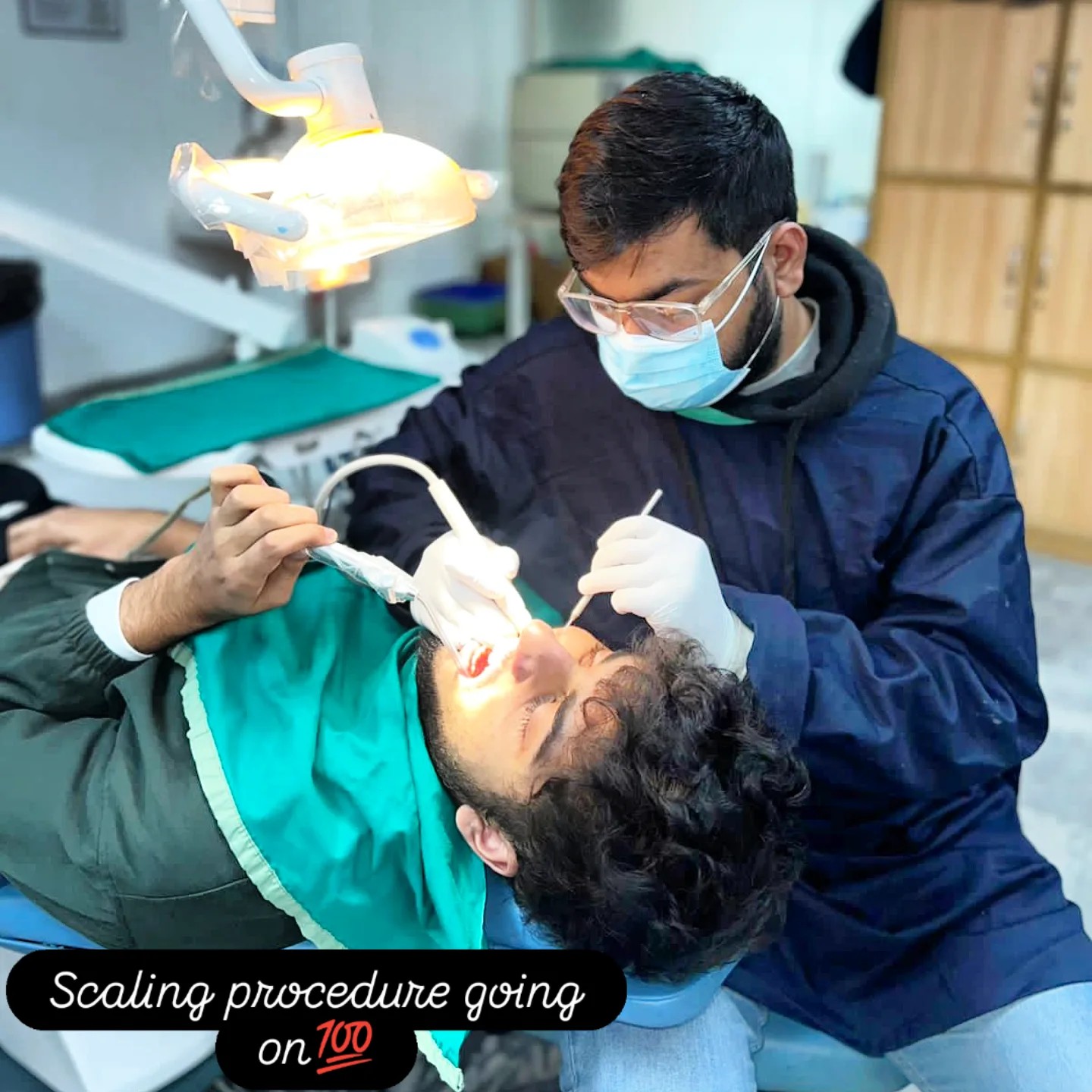
Dr. Mian Momin Ahmad
“The implant is the easy part. The CBCT is everything. We never quote a single implant without a CBCT scan first — the bone tells us if it is an easy case, a complex case, or one that needs a graft first. Patients who have been given a fixed price over the phone have been quoted blind. Before any incision, you will see your CBCT, hear the bone density read, and understand whether your case is a 90,000 single tooth or a 130,000 case with a graft. Both numbers can be honest. The dishonest answer is the one given without a scan.”
What our implant patients said about the journey.
Six recent reviews from patients who had implant work done at Odonto — single tooth, multi-tooth bridge, and full-arch All-on-4. Names and treatment details are accurate where the patient was happy to share them.
“Lost a molar in my late 30s and put off replacing it for years. The CBCT showed enough bone — surgery was much easier than I expected. The crown feels exactly like a tooth. Eight months on and I forget which side is the implant.”
“Two implants holding a 3-tooth bridge after years with a partial denture. The difference is night and day — I forgot what real chewing felt like. The written quote at the start was exactly what I paid at the end.”
“I had worn a lower denture for over a decade. All-on-4 changed how I eat, smile and speak. The same-day temporary teeth meant I never went home toothless. Worth every rupee, twice over.”
“Came to Odonto after being quoted PKR 250,000 for a single Korean implant at another clinic. Dr. Momin showed me the CBCT, walked me through the brand options honestly, and the final invoice was less than half the other quote.”
“Premium Straumann implant for a front tooth I had lost in a road accident. The shade match on the zirconia crown is unreal — I keep forgetting which one was the missing tooth. Money well spent on the visible front tooth.”
“Both arches done All-on-4 at 62 years old. Six months after surgery, I am eating naan, beef, and salad like a 25-year-old. The instalment plan made the cost manageable. The team at Odonto were patient and honest throughout.”
Real Lahore patients. Real outcomes.
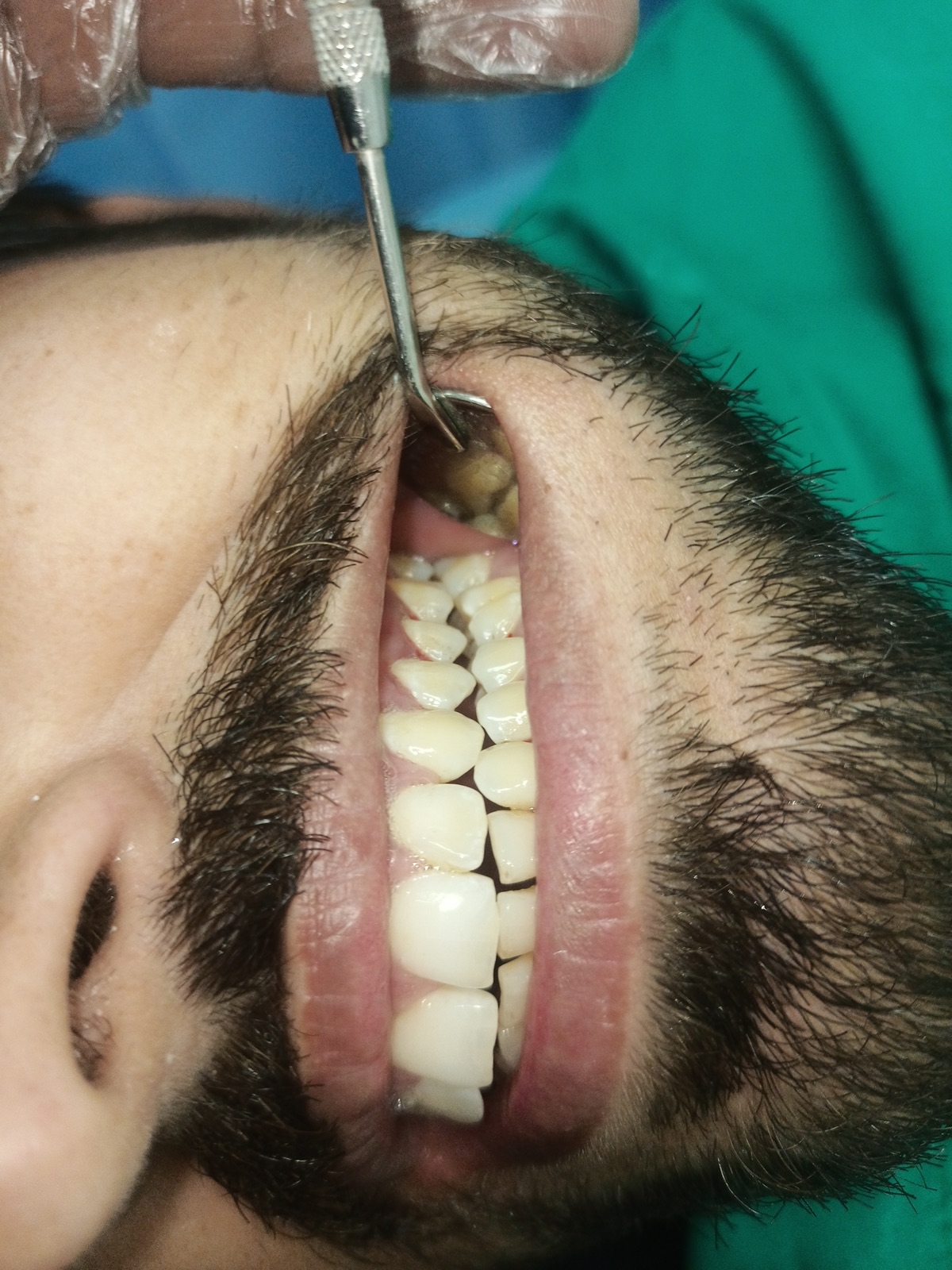
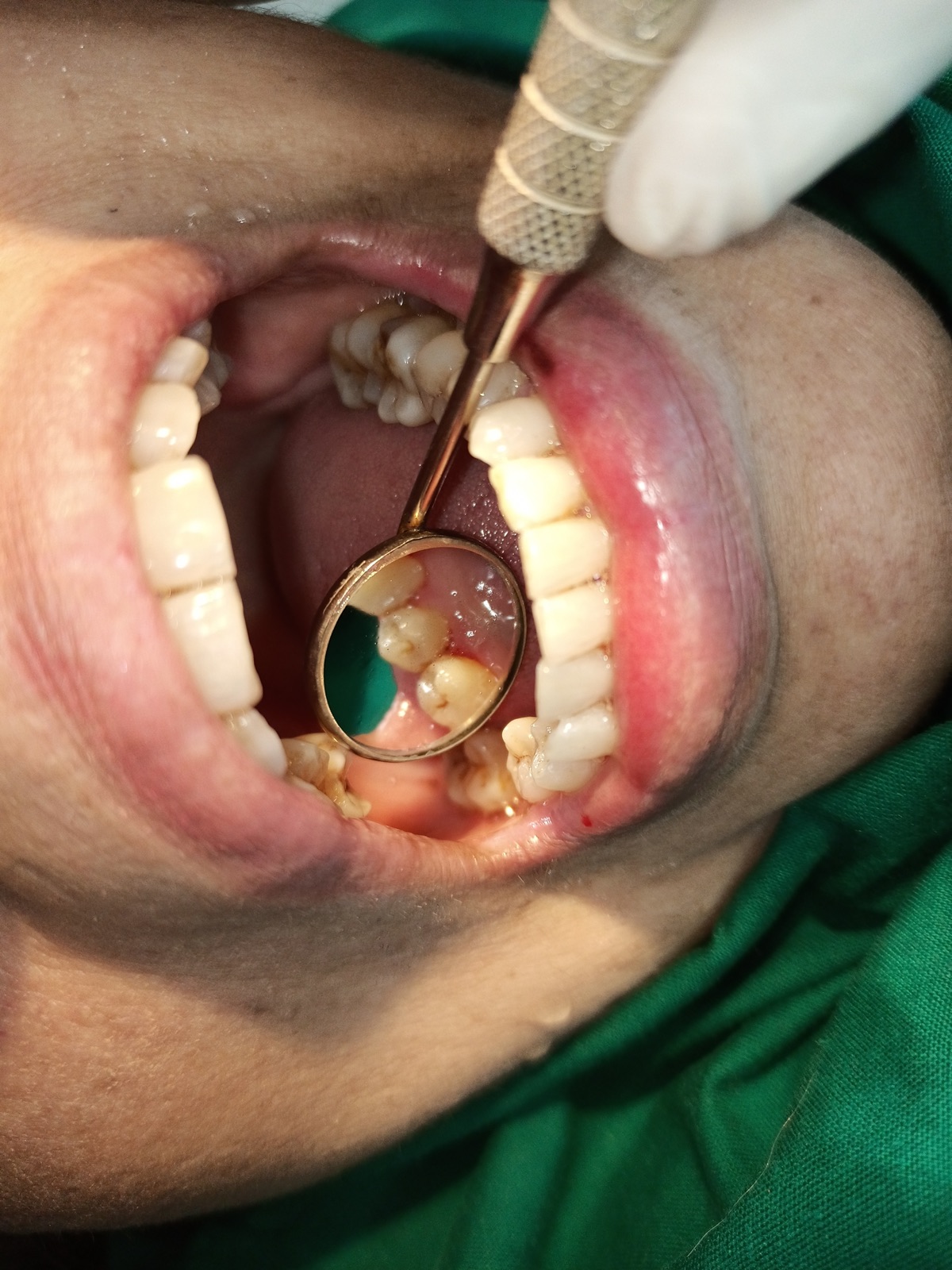
Long-form case studies from our patient archive. Every photo was taken in our Engineers Town clinic with patient consent.
Four ways to pay for your implant work.
Implants are the most permanent tooth replacement we offer — and the most expensive in upfront cost. The four payment paths below cover almost every patient's situation, including the full-arch cases that span PKR 600,000–1,800,000. Discussed openly at consultation, no pressure.
Treatments, problems, and terminology.
Related treatments
What it relates to
Replace the tooth. Properly.
Book a free 15-minute consultation with a 3D CBCT scan. We'll read the bone, recommend the right implant brand and configuration, and put a written quote in your hand — same day. No pressure to book the surgery, no hidden charges if you do.